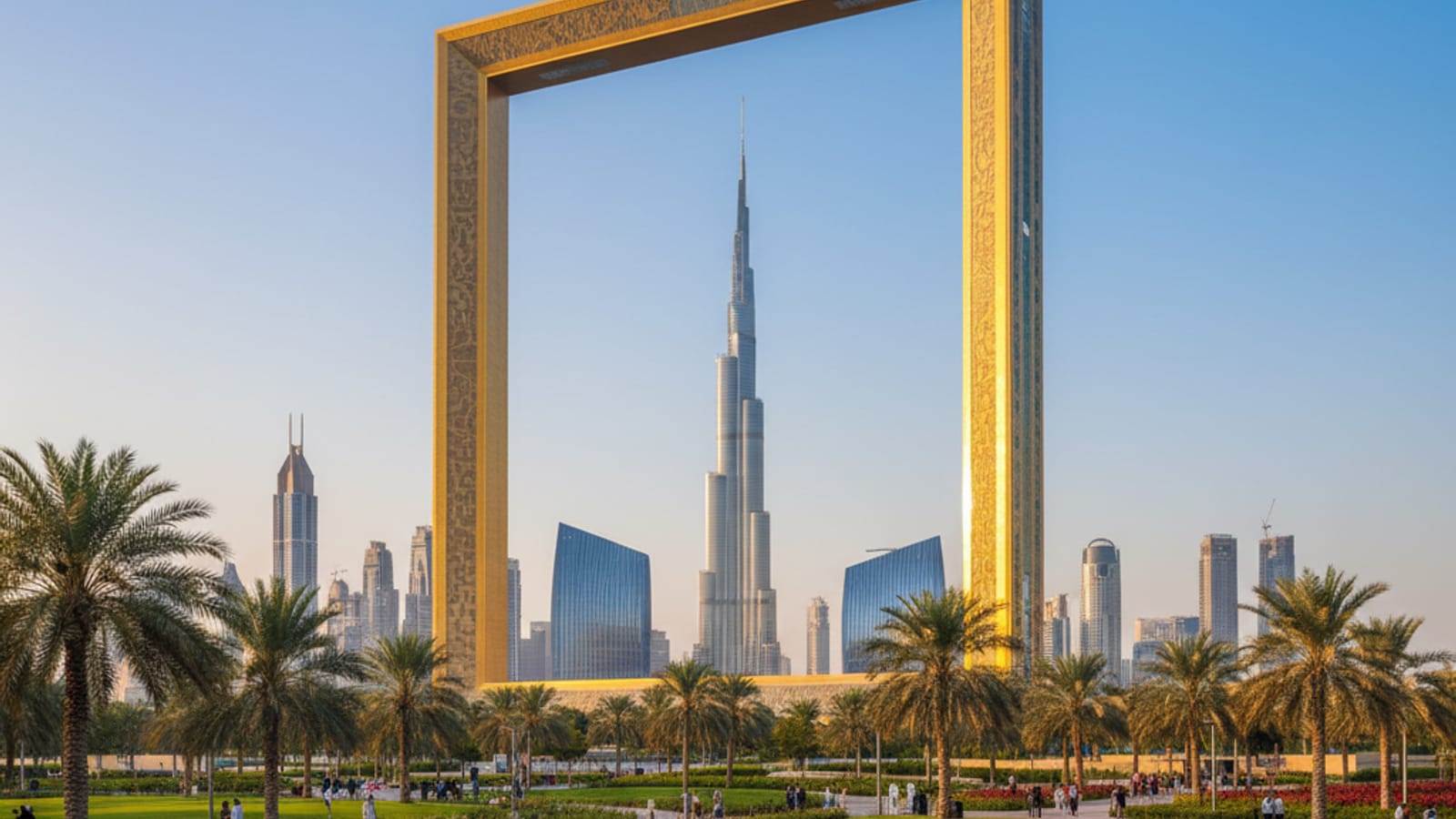
Stand on the glass walkway 150 metres above Zabeel Park and see Old Dubai and Downtown Dubai at once. This guide covers location, transport, ticket prices, opening hours, a floor-by-floor walkthrough and an honest assessment of whether the Dubai Frame earns a place on your itinerary.
Stand on the glass walkway 150 metres above Zabeel Park and two cities appear at once. To the north, the low-rise rooftops and creek-side minarets of Old Dubai spread across the horizon in warm, dusty tones. To the south, the glass-and-steel towers of Downtown Dubai catch the light and throw it back in sharp flashes. The Dubai Frame holds both worlds in a single view - and that is precisely the point. This guide covers everything needed to plan the visit: exact location, how to get there, current ticket prices, opening hours, a floor-by-floor walkthrough of the experience, and an honest assessment of whether it earns a place on the itinerary.
Location: Gate 4, Zabeel Park, Al Kifaf, Dubai
2026 Ticket Price: AED 50 (adults), AED 20 (children aged 3-12), prices exclude VAT
Recommended Visit Window: Early morning or the hour before sunset, October to April for cooler temperatures
One-Line Verdict: A genuinely rewarding stop for first-time visitors - the dual-city panorama and cultural galleries make a compelling case at AED 50
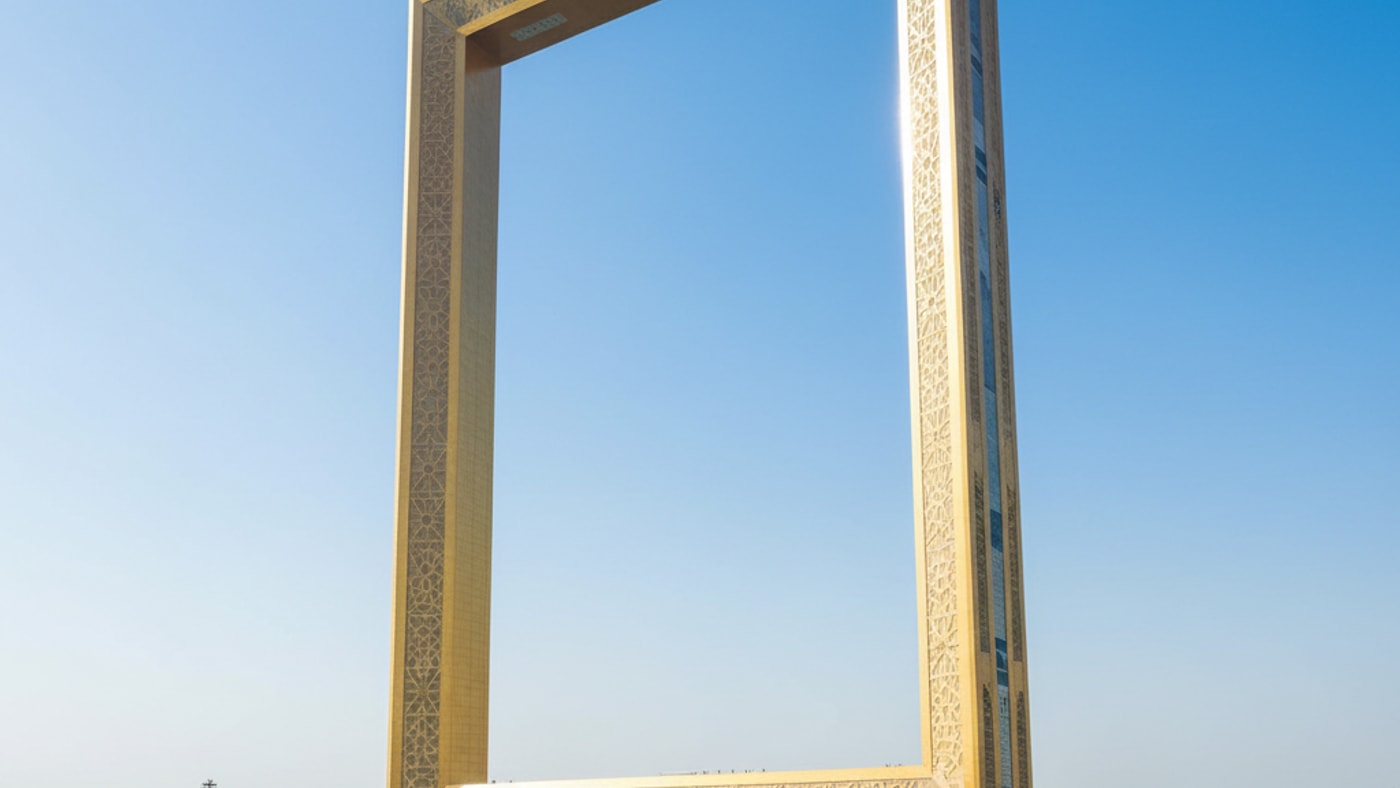
The Dubai Frame stands 150.23 metres tall and 95.53 metres wide - roughly the height of a 48-storey building - making it the largest building in the shape of a picture frame according to Guinness World Records. Set within Zabeel Park in the Al Kifaf district, the gold-clad steel structure was designed with a single unifying concept: to frame the historic and modern faces of Dubai simultaneously. From either side of the bridge at the top, the city reads like a before-and-after portrait held within one gilded border.
The scale becomes tangible only in person. At street level, the two vertical towers rise in polished gold cladding, connected at the top by the sky bridge that forms the frame's upper bar. Dubai Municipality, which operates the structure, commissioned the project to function as both a civic landmark and a cultural institution - not simply a viewing platform, but a walk-through experience of the city's story. Travellers will find the concept more thoughtfully executed than the exterior photographs suggest. Visitors should confirm all details, including dimensions and operational information, with the official venue website before travelling.
The Dubai Frame opened to the public on 1 January 2018, the result of an international design competition organised by Dubai Municipality, ThyssenKrupp Elevator, and the International Union of Architects, which drew 926 proposals from around the world. The winning concept came from architect Fernando Donis, whose design took the ThyssenKrupp Elevator International Award. The idea was straightforward in ambition: a structure positioned at the geographic and symbolic boundary between the city's trading-port origins and its current skyline, framing both in a single architectural gesture. For first-time visitors, that metaphor - a city consciously memorialising its own transformation - gives the experience a cultural weight that extends well beyond the view.
The Dubai Frame sits inside Zabeel Park in the Al Kifaf area of Dubai, positioned between the older residential districts of Karama and Al Jafiliya to the north and the newer corridors of the city to the south. That placement was deliberate: the park acts as a green buffer zone between Dubai's two faces, and the Frame rises from it as a visual anchor for both. Visitors arriving by any means should head directly to Gate 4, which is the designated main entrance and the closest access point to the Frame itself, minimising the walk through the park.
The confirmed address is Gate 4, Zabeel Park, Al Kifaf. Gate configurations and access points can change, so travellers are advised to verify the current entrance arrangements with the official Zabeel Park operator or the Dubai Frame venue website before visiting. From Gate 4, the Frame's towers are visible immediately and the walking distance to the ticket entrance is short. Dubai Municipality operates both the park and the Frame, providing a consistent standard of facilities at the site.
The closest Dubai Metro station is Max Metro Station - formerly known as Al Jafiliya Metro Station - on the Red Line, approximately a 15-minute walk from the Frame at around 1.1 to 1.2 kilometres. The route runs through the park, which is pleasant in cooler months but demanding at midday in summer. All walking times should be treated as approximate; heat, park entry point, and individual pace all affect the actual duration. Travellers are advised to check the RTA journey planner or a live mapping app for current routing before departing.
Metro: Max Metro Station (Red Line), approximately 15-minute walk
Taxi / Rideshare: Taxis and apps such as Careem and Uber drop off at the park perimeter; request Gate 4
Bus: Public RTA bus routes serve Al Jafiliya and Karama; check RTA's route planner for current services
Car / Parking: Paid parking is available at Zabeel Park; arrival via Gate 4 recommended for proximity
The Dubai Frame opens daily at 8:00 AM and closes at 9:00 PM, including weekends and public holidays. A specific last-entry time is not published on the official site and should be confirmed directly with the venue before visiting. Hours are subject to variation during Ramadan and other public holidays - during Ramadan, the adjusted schedule reflects the rhythm of the season and can offer a quieter, atmospheric visit experience for those who plan accordingly.
For most visitors, the optimal windows are early morning - when the light is soft and crowds are thin - or the hour before sunset, when the low sun turns the gold cladding warm and the Downtown skyline catches a particular quality of light from the bridge above. October through April offers the most comfortable temperatures for the outdoor walk from the metro or through the park.
| Day | Opening Time | Closing Time | Last Entry | Recommended Visit Window |
|---|---|---|---|---|
| Daily (standard) | 8:00 AM | 9:00 PM | Confirm with venue | Early morning or pre-sunset (1 hr before close) |
| Ramadan / Public Holidays | Subject to variation | Subject to variation | Confirm with venue | Confirm with venue |
Ticket prices for the Dubai Frame are set by Dubai Municipality Administrative Resolution No. 78 of 2022. The confirmed 2026 adult ticket is AED 50; a child ticket for ages 3 to 12 is AED 20; infants under 3 enter free; and People of Determination, together with two companions, also enter free. These prices do not include VAT. At AED 50 for a typical visit of one to two hours, the per-hour cost compares reasonably with other paid cultural experiences in Dubai, though value perception naturally varies by visitor. All travellers are advised to confirm current prices with the official Dubai Frame website before purchasing.
Entry covers the full visitor route: the Past (Old Dubai) Gallery at ground level, the elevator ascent to the Sky Bridge at 150 metres, the glass-floor walkway with panoramic views in both directions, and the descent through the Future Dubai Gallery. No element of the standard route requires a separate ticket. The experience is self-guided, which suits travellers who prefer to set their own pace through the galleries.
| Ticket Category | Price (2026, excl. VAT) | Notes |
|---|---|---|
| Standard Adult | AED 50 | Confirm current price before booking |
| Child (ages 3-12) | AED 20 | Confirm current price before booking |
| Infant (under 3) | Free | - |
| People of Determination + 2 companions | Free | - |
| VAT | Not included | Added at point of purchase |
Tickets are available through the official Dubai Frame website and through authorised UAE tourism booking platforms. Online booking carries the practical advantage of confirmed entry, particularly during the October-to-April peak season and UAE school holiday periods when walk-up queues are longer. Travellers are advised to book through official channels rather than third-party aggregators to avoid fee discrepancies. All fees and availability are subject to change and should be confirmed directly before purchasing.
The visit unfolds in three distinct stages, each with its own atmosphere and purpose. The elevator hum, the gradual shift from enclosed gallery to open sky, and the moment the city spreads below the glass underfoot - the experience builds in a way that rewards a measured pace. What follows is a chronological account of each stage, from the ground-level history exhibits through to the sky bridge and the future-focused gallery on the descent.
The visitor route begins at the Past (Old Dubai) Gallery, a multimedia exhibition at ground level that traces the history of Dubai from its origins as a pearl-diving and trading settlement through the decades that shaped the modern city. Interactive timelines and immersive display formats give the exhibits a tactile quality that works well for both adults and children. Plan for roughly 15 to 20 minutes here before the ascent - the gallery provides cultural context that makes the view from the bridge above considerably more meaningful.
The elevator carries visitors to the Sky Bridge at approximately 150 metres above Zabeel Park. The bridge stretches around 93 metres between the two towers, with a central section of liquid crystal smart glass that appears frosted until stepped on - the moment a foot makes contact, the panel turns transparent and the city appears directly below. Some visitors find this section instinctively unsettling; others walk back and forth across it. Both responses are entirely normal, and neither diminishes the experience.
The panoramic orientation is clean and legible from the bridge: Old Dubai spreads to the north - the creek, the heritage districts, the modest skyline of Deira - while Downtown Dubai fills the southern view, with the Burj Khalifa rising above Sheikh Zayed Road. The two faces of the city that the Frame was designed to frame are visible simultaneously, which turns an abstract architectural concept into something genuinely felt. Photography is permitted throughout the bridge; the dual-city panorama rewards a wide-angle lens on a clear day.
After the Sky Bridge, visitors descend through the second tower and exit via the Future Dubai Gallery, reached through a vortex tunnel that creates an effective tonal shift from the open sky above. The gallery uses projections and multimedia displays to chart Dubai's vision for its next chapter - urban growth, sustainable development, and the city's ambitions beyond the current skyline. Treated as the concluding chapter of a three-part arc - past, present observed from the bridge, future imagined below - the gallery gives the visit a narrative shape that lingers after leaving.
Zabeel Park offers considerably more than a backdrop for the Frame's exterior. The park covers a wide area of landscaped greenery with a central lake, jogging and walking tracks, children's play areas, open lawn spaces, and cafe facilities - an atmosphere notably calmer than the busier tourism zones closer to Downtown. Extending the visit into the park itself turns a 90-minute attraction into a half-day outing, particularly rewarding in the cooler months when sitting by the lake after the Frame visit is genuinely pleasant.
Travellers should note that a separate Zabeel Park admission fee - reported in some sources at AED 5 - may apply in addition to the Dubai Frame ticket. This figure has not been definitively confirmed as current by official sources and should be verified with Dubai Municipality before visiting. Dubai Municipality operates both the park and the Frame, so the official park website is the most reliable source for current gate fees and facilities.
In the park: lakeside walking paths; open lawn areas for sitting and picnicking; children's play areas; jogging and cycling tracks; cafe facilities within the park.
At AED 50 per adult, plus VAT, the Dubai Frame competes with a range of paid experiences in Dubai. The Sky Bridge view is the centrepiece, and it delivers - the dual-city panorama is genuinely distinct from any other observation point in Dubai, including the Burj Khalifa, because the Frame's lower height and central positioning make both Old Dubai and Downtown legible simultaneously rather than reducing the city to an abstract aerial plan. The cultural galleries add substance to what could otherwise be a ten-minute stop.
Value, of course, depends on context. For first-time visitors to Dubai, the Frame offers one of the most concentrated expressions of the city's story available in a single experience. For families, the galleries and the glass floor make it a memorable and accessible visit. For repeat visitors who have already seen the view or those working through a compressed itinerary, it may sit lower on the priority list.
Worth visiting if: First trip to Dubai; travelling with children; interested in the city's history and architecture; seeking a view that contextualises both old and new Dubai
Lower priority if: Already experienced the view on a previous visit; itinerary and budget are tight; primary interest is nightlife or beach activities rather than cultural landmarks
A few practical points make a meaningful difference to the experience. The tips below are drawn from research into visitor accounts and the venue's own published guidance.
1. Time the visit for golden hour: Photographers who visit in the hour before sunset find the gold cladding at its most striking from outside the park, and the Downtown skyline illuminated from the bridge. Early morning offers softer light and thinner crowds.
2. Get the full exterior shot from outside the park: The best wide-angle photographs of the complete Frame structure are taken from a distance - from outside the park perimeter, not from directly below. Allow time for this before entering.
3. Wear comfortable, closed shoes: The walk from the metro through the park adds up, and the glass floor benefits from footwear that allows confident footing. Sandals work, but sturdy shoes are more practical.
4. Bring sunglasses: Glare on the glass walkway is significant in the morning and at midday. Sunglasses make the view more comfortable to take in and improve photography.
5. Dress modestly: Zabeel Park is a public space and modest dress is required at the Dubai Frame. Lightweight, loose-fitting clothing that covers shoulders and knees is appropriate and practical in the heat.
6. Check photography rules before bringing professional equipment: Personal photography is permitted throughout the Frame. Commercial or professional photography and tripods are restricted per available sources - travellers planning a professional shoot should confirm current rules directly with the venue before visiting.
The Dubai Frame earns its place in Zabeel Park not through spectacle alone but through the clarity of its concept. From 150 metres, the full arc of the city's transformation becomes visible in a single glance - the trading-port streets to the north, the global skyline to the south, the green expanse of the park below. Travellers who approach it as a moment of genuine perspective, rather than a checkbox on an itinerary, tend to leave with something more considered than a photograph. The visit rewards those who arrive curious and unhurried.
The confirmed 2026 adult ticket is AED 50; child tickets for ages 3 to 12 are AED 20; infants under 3 enter free; People of Determination and two companions also enter free. Prices are set by Dubai Municipality and do not include VAT. Travellers should confirm current pricing with the official Dubai Frame website before booking.
The Dubai Frame opens daily from 8:00 AM to 9:00 PM, including weekends and public holidays, according to the official site. Hours may vary during Ramadan and public holidays. A specific last-entry time is not published - visitors are advised to confirm directly with the venue before travelling.
The Dubai Frame is located at Gate 4, Zabeel Park, in the Al Kifaf area of Dubai, between the Karama and Al Jafiliya neighbourhoods. Gate 4 is the designated main entrance and the closest access point to the Frame. Travellers should confirm current gate access with the official operator before visiting, as configurations can change.
The nearest metro station is Max Metro Station - formerly known as Al Jafiliya Metro Station - on the Red Line, approximately a 15-minute walk of around 1.1 to 1.2 kilometres. Walking times are approximate and vary with heat and park entry point. Travellers are advised to check the RTA journey planner for current routing before departing.
For first-time visitors and families, the Dubai Frame offers a genuinely rewarding experience: the Sky Bridge panorama is distinct from any other viewpoint in the city, and the cultural galleries add meaningful context. Repeat visitors or those with tight itineraries may prioritise differently. Value depends on visit context and personal interest in Dubai's history.
Early morning and the hour before sunset are the optimal windows - light quality is best, crowds are thinner, and the gold cladding is at its most photogenic. October through April offers the most comfortable temperatures for the walk from the metro or through Zabeel Park. Midday visits in summer are manageable but warm.
Most visitors complete the full route - the Past (Old Dubai) Gallery, the Sky Bridge, and the Future Dubai Gallery - in approximately one to two hours. Those who spend more time in the galleries or on the bridge may take longer. The estimate is approximate; travellers who also explore Zabeel Park should allow additional time.
Get an instant summary or ask follow-up questions about this article in your favourite assistant.

UAE Editor at TravelCamel
Daniel moved to Dubai in 2016 and covers attractions, transport and day trips across all seven emirates. His rule for every guide: if a place is not worth the ticket, the guide says so. More guides by Daniel →