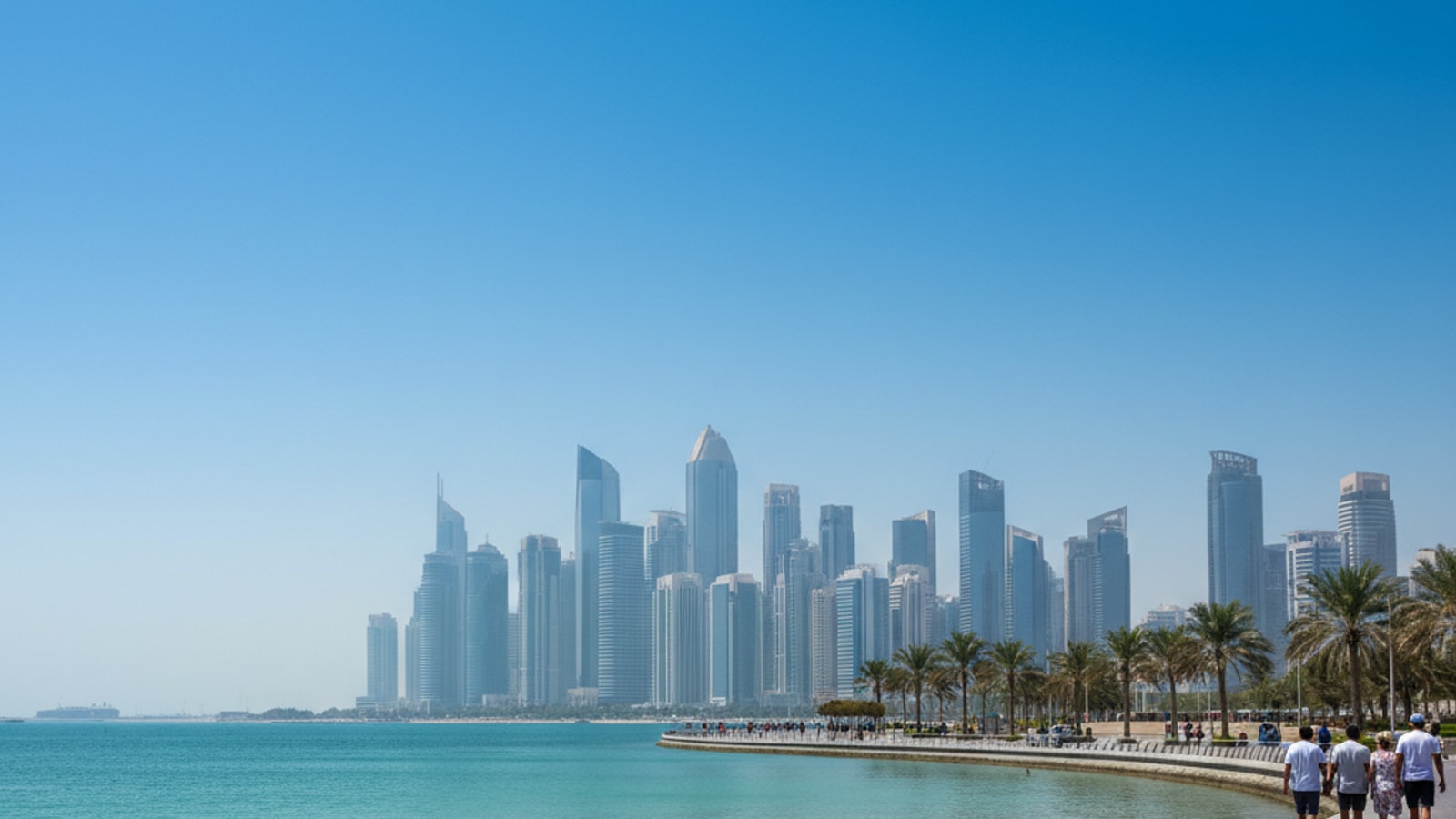
Abu Dhabi runs on two seasons, not four: a mild winter and an extreme summer. Travel Camel's team reads this city's skies through regional experience, not raw data alone.
At dawn on the Abu Dhabi Corniche, light catches the water in long gold ribbons - and the air is already warm before 7am. Travel Camel's team has spent years reading this city's skies, and what follows is an interpretive guide built on regional experience, not raw data alone.
Abu Dhabi operates on two seasons, not four: a mild winter and an extreme summer.
Rain is rare - roughly 5-10 days per year - but its impact when it arrives can be surprisingly disruptive.
The best months to visit are generally November through March, with shoulder-season value available in April-May and September-October.
Coastal Abu Dhabi and inland Al Ain offer distinctly different climate experiences within the same emirate.
Visitors arriving in Abu Dhabi expecting the familiar rhythm of four seasons will need to reset their expectations. The United Arab Emirates sits within a tropical semi-arid desert climate zone - classified as Koppen BWh - which means the year divides into two broad chapters: a mild, relatively comfortable winter and a punishing, humid summer.
The cooler season runs approximately November through March. During these months, meteorological data points to average temperatures ranging from roughly 12C at night to around 26C during the day, with humidity levels that remain comparatively manageable. Outdoor life is genuinely pleasant. Morning walks along the Corniche, desert excursions at dusk, open-air dining - all feel natural rather than heroic.
Then comes the heat. From approximately June through September, daytime highs regularly reach 35C to 42C according to climate reference sources, and the humidity climbs with them. This is the detail that raw temperature figures consistently fail to capture. A 35C day in March, with low humidity and a light breeze, feels nothing like a 35C day in July, when relative humidity can sit between 60% and 100% and the air itself seems to press down.
The terrain plays a quiet supporting role here. Abu Dhabi's coastal position on the Arabian Gulf means moisture is never far away. That proximity amplifies summer discomfort in ways that landlocked desert cities simply do not experience. Travel Camel's team recommends that visitors confirm current seasonal conditions with official UAE tourism or meteorological authorities before booking, as year-to-year variation does occur.
Checking the temperature before stepping outside is a good habit. Checking the humidity is a better one. When a weather service reports 31C with 74% relative humidity, the actual feels-like value climbs considerably - meteorological monitoring data has recorded a heat index of approximately 37.6C under exactly those conditions at Abu Dhabi Bateen Airport. The number on the screen and the sensation in the street are two different things.
During summer months, the probability of muggy conditions is high - climate data from WeatherSpark places this figure between 81% and 91% across the peak season, reaching its apex around late July. As a practical seasonal rule of thumb, if humidity climbs above 60% before 10am, visitors can reasonably consider rescheduling outdoor plans to the evening. This is an observational guide, not a guaranteed threshold, and conditions shift daily.
For live readings, the National Center of Meteorology (NCM) publishes real-time data on temperature, humidity, wind speed, and atmospheric pressure. Travel Camel's team recommends checking NCM before any outdoor excursion, particularly in summer.
Heat and humidity get most of the attention, but Abu Dhabi's climate has a third character worth knowing: the wind. Specifically, the Shamal - a northwesterly wind that pushes down across the Arabian Gulf with enough force to change the texture of an entire day.
Research published in Frontiers in Environmental Science describes the Shamal as a dominant northwesterly system running northwest to southeast across the UAE. Winter Shamal events occur between November and March; summer Shamal activity is common from June through August, with onset typically around late May according to NASA Earth Observatory. When a strong Shamal arrives, visibility can fall below 5 kilometres as dust and sand are lifted into the atmosphere - outdoor events get rescheduled, the sky turns a dusty amber, and grit settles on everything within minutes.
The air quality index (AQI) becomes a practical tool during these periods. Atmospheric pressure shifts drive the wind, and the wind drives the dust - the two entities are linked. Travel Camel frames the Shamal not as a hazard but as part of Abu Dhabi's character: dramatic, ancient, and entirely worth understanding before heading out.
What Is a Shamal? The Shamal is a strong northwesterly wind that blows across the Arabian Gulf and the UAE, carrying dust and sand from the desert interior. It occurs in both winter and summer, can reduce visibility sharply, and is one of the defining atmospheric features of Gulf weather.
Knowing the two-season framework is a start. Knowing which specific months deliver the best combination of comfort, low humidity, and manageable crowds is what actually shapes a great trip. Climate reference data from WeatherSpark and Climate Lookup shows monthly average high temperatures ranging from approximately 23C in January to around 39C in July and August, while relative humidity varies from roughly 52% in May to approximately 66% in January - a counterintuitive figure explained by winter sea-moisture patterns.
Travel Camel's team has moved through this city across every month of the calendar. The months that consistently earn the highest recommendation are November, February, and March - mild temperatures, lower humidity than deep winter, and a city calendar full of events that reward being outdoors. December and January are peak season for good reason, though early mornings in those months carry a fog risk that can affect driving and early flights. April and October occupy a sweet spot for visitors who want fewer crowds and are comfortable with slightly warmer afternoons.
The summer months - June through September - are for visitors with specific reasons to be in the city: business, transit, or a genuine curiosity about life in extreme heat. Outdoor activity is best reserved for early morning or after dark. All temperature and humidity figures below are approximate monthly averages drawn from meteorological reference data; readers should verify current forecasts before booking.
| Month | Avg High (C) | Avg Low (C) | Humidity (%) | Comfort Rating |
|---|---|---|---|---|
| January | 23 | 15 | 66 | Excellent |
| February | 25 | 16 | 63 | Excellent |
| March | 29 | 19 | 59 | Very Good |
| April | 34 | 23 | 55 | Good |
| May | 38 | 27 | 52 | Moderate |
| June | 40 | 30 | 55 | Poor |
| July | 39 | 31 | 60 | Poor |
| August | 39 | 31 | 62 | Poor |
| September | 37 | 28 | 61 | Poor |
| October | 33 | 24 | 58 | Good |
| November | 28 | 19 | 61 | Very Good |
| December | 24 | 16 | 65 | Excellent |
January is statistically the coldest month in Abu Dhabi - that much is clear from climate reference data at TimeandDate. City-area overnight lows typically cluster around 15C to 17.6C, while airport-area readings can fall to approximately 13.9C according to WeatherSpark's January averages. Cold, by Abu Dhabi's standards, is a relative concept.
Travel Camel's team has spent January evenings on a desert safari where a light layer genuinely felt welcome by dusk - not because the temperature was dramatic, but because the dry air and open sky let the warmth of the day escape quickly once the sun dropped. Visitors from cooler climates will find January afternoons pleasantly warm. Those arriving from tropical climates may actually reach for an extra layer after sunset. Either way, it is the most temperate month the city offers.
November through March represents the standard peak tourism window, and for good reason. Daytime temperatures through this period sit roughly in the 24C to 30C range according to Lonely Planet's seasonal guidance, humidity is at its most manageable, and the city's outdoor spaces - the Corniche, the desert, the cultural quarter - are all genuinely inviting. This is when Abu Dhabi performs at its best for most visitors.
The team's top pick is February: past the fog-heavy start of winter, before the heat begins to build in April, and timed with cultural events that fill the city's calendar. November is a close second for visitors who want the full peak-season atmosphere without paying December and January prices. For those who prefer quieter streets, April and October - the shoulder seasons flagged by both U.S. News Travel and Champion Traveler - offer warmer but still workable conditions with noticeably fewer crowds. Peak-season rates are higher; visitors should verify current pricing with operators before booking.
Yes, it rains in Abu Dhabi. Not often, and rarely for long - but it does rain, and visitors who assume otherwise occasionally find themselves unprepared. Annual rainfall totals approximately 42-56 mm according to past climate data, spread across roughly 5-10 rainy days per year. The wettest period falls in winter and spring, with February and March most likely to deliver actual precipitation.
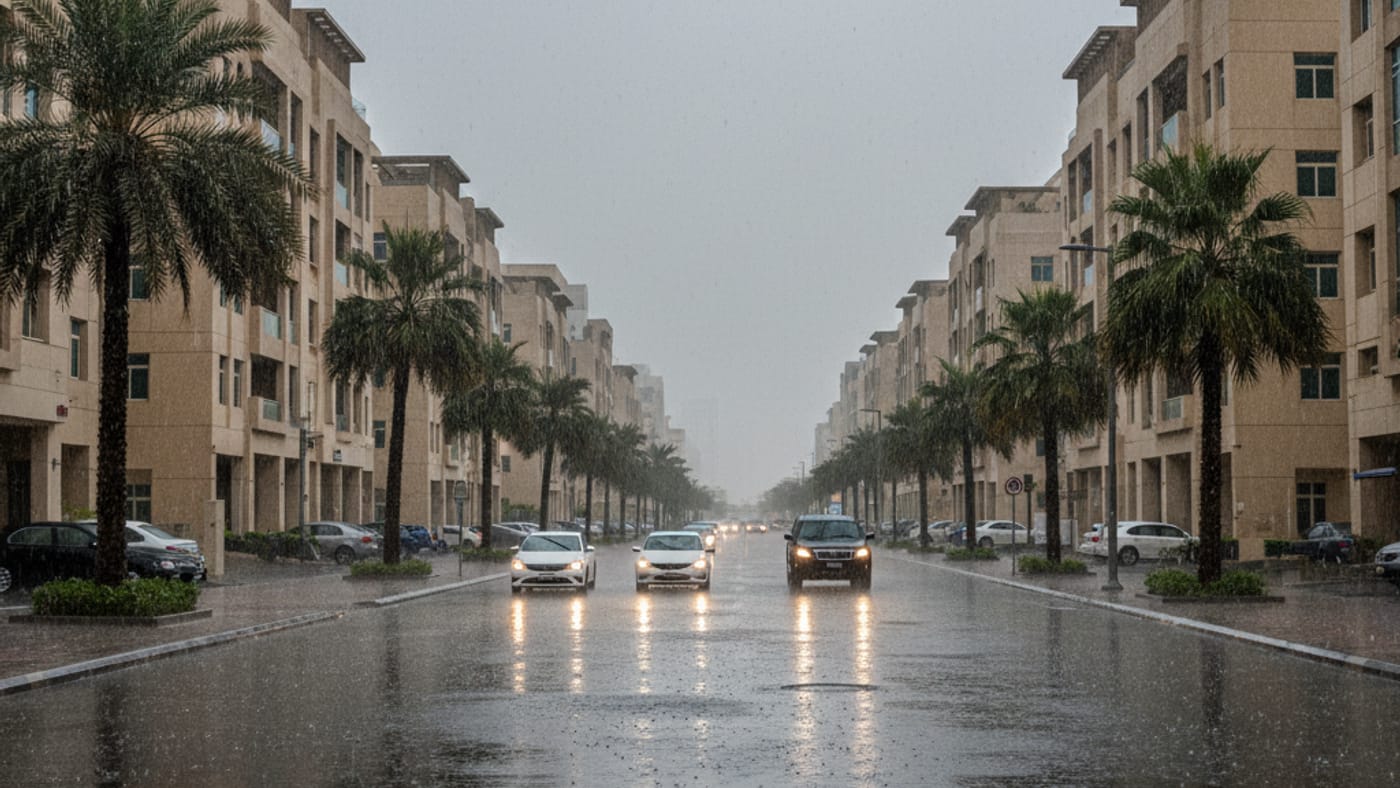
Travel Camel's team has watched a rare winter downpour transform the city within minutes. Underpasses flood. Traffic slows. Drivers who have rarely encountered rain on these roads proceed with exaggerated caution or none at all. The drama is real, and it reflects a structural truth: Abu Dhabi's drainage infrastructure was not designed for sustained rainfall, and even a modest event can cause localised disruption disproportionate to the volume of water involved - a point supported by research on urban flash flooding in the Emirates.
Average annual rainfall: approximately 42-56 mm
Rainy days per year: roughly 5-10
Wettest months: February and/or March
Typical storm duration: short and intense rather than prolonged
Key risk: urban surface flooding due to limited drainage capacity
Readers should verify current meteorological data with official UAE sources before travel, as year-to-year variation in precipitation does occur.
Abu Dhabi's weather story does not end with temperature and rain. Dust and humidity-driven haze are regular features of the atmosphere here, and they matter - particularly for visitors with respiratory sensitivity or those planning extended time outdoors.
The Environment Agency Abu Dhabi (EAD) operates a monitoring network of 20 fixed stations and 2 mobile stations across the emirate, publishing real-time air quality index (AQI) data for a standard set of pollutants: PM10, PM2.5, ground-level ozone, sulfur dioxide, nitrogen dioxide, and carbon monoxide. This network provides a genuinely reliable picture of daily conditions and is the reference Travel Camel's team recommends for anyone planning outdoor activity.
Dust events are typically wind-driven - the Shamal lifts particulate matter across the city and pushes AQI readings higher in ways that are not always visible until the sky changes colour. Haze in coastal summer conditions is a different phenomenon: humidity-driven and slower to clear, it softens the horizon and reduces the apparent clarity of the air even when no dust is present. Travellers with asthma, allergies, or other respiratory sensitivities should consult EAD resources and check AQI readings before outdoor excursions. The EAD website provides accessible real-time data at no cost.
AQI Quick Reference: Good (0-50): outdoor activity suitable for all. Moderate (51-100): sensitive individuals may wish to limit prolonged outdoor exertion. Poor (101+): travellers with respiratory sensitivity should consider indoor alternatives and check EAD guidance directly.
Most weather coverage of Abu Dhabi focuses entirely on the coastal city. That is understandable - it is where most visitors stay - but it misses something important. The Emirate of Abu Dhabi is vast, and its interior tells a different climate story.
Al Ain sits at approximately 292-311 metres above sea level according to Wikipedia's elevation data - a significant difference from the near-sea-level coastal city. That elevation, combined with distance from the Gulf, produces a climate that is hotter in raw temperature terms on summer afternoons but dramatically drier. Where coastal Abu Dhabi can see relative humidity values well above 60%, Al Ain's humidity typically ranges between roughly 30% and 60% depending on the month, based on TimeandDate climate averages. The air in Al Ain in July is searingly hot. It is not, however, the clammy, enveloping heat of the coast.
Travel Camel's team has made the drive from the city to Al Ain more times than they can count. There is a moment, roughly an hour from the coast, where the air shifts - the humidity falls away, the landscape opens into date palms and red-sand ridges, and the heat takes on a different quality. Drier. Cleaner. More negotiable. Al Ain is a destination worthy of its own itinerary, not merely a day trip.
Different visitors thrive in different conditions, and the Abu Dhabi emirate is generous enough to offer both. The table below lays out the key contrasts; the recommendations beneath it match traveller type to region.
| Factor | Abu Dhabi City (Coastal) | Al Ain (Inland) |
|---|---|---|
| Summer humidity | Often above 60% | Typically 30%-60% |
| Avg summer high | ~38C-42C | ~40C-44C (drier) |
| Winter lows | ~13C-17C | Lower, with greater swings |
| Annual rainfall | ~42-56 mm | Slightly higher in some years |
| Best activities | Beach, Corniche, cultural sites, luxury hotels | Desert hiking, UNESCO oasis, falconry, heritage sites |
Visitors who prefer coastal settings, resort amenities, and the full city experience will find Abu Dhabi's waterfront the natural base.
Visitors who are sensitive to humidity, or who prefer a drier heat, the team recommends Al Ain - particularly between October and March when conditions are genuinely pleasant.
Families looking for a quieter pace alongside world-class heritage will find Al Ain's UNESCO-listed oasis and Al Ain Zoo a compelling combination.
Desert adventurers who want dramatic dune landscapes and starlit skies will find the edges of the Rub' al Khali more accessible from Al Ain. Confirm activity availability with local operators before visiting.
Understanding Abu Dhabi's climate is one thing. Building a trip around it - with realistic expectations about pricing, packing, and daily logistics - is where that understanding pays off. Peak season runs November through March. Rates for hotels, tours, and desert experiences are higher during this window; visitors typically find prices noticeably lower in summer and shoulder months, though summer brings its own practical demands.
Reliable air conditioning is not a luxury in Abu Dhabi - it is infrastructure. In summer, it is the difference between a functional day and a miserable one. When evaluating accommodation, transport, and indoor attractions, the question is not whether AC is available but how consistent and effective it is. Travel Camel's team recommends booking outdoor desert tours well in advance for cooler-season weekends, as popular operators fill quickly between November and February.
December and January travellers should factor in winter fog when planning early-morning logistics. Fog in these months can reduce visibility on roads and affect departure schedules at the airport - a practical consideration for anyone catching an early flight or joining a pre-dawn desert tour. Visitors should verify current pricing and conditions with official operators and Abu Dhabi's tourism board before confirming bookings.
Abu Dhabi's sun is intense year-round, but the UV index varies significantly by season. In summer, peak midday UV values reach approximately 12-13+ on clear days according to UV index monitoring data - a level that can cause skin damage in under 15 minutes of unprotected exposure. Winter values drop to roughly 4-7, depending on the month and cloud cover, but remain meaningful enough to warrant daily SPF.
Timing outdoor activity around the UV peak is one of the smartest moves visitors can make. Before 10am and after 4pm, the light is lower, the heat is more bearable, and Abu Dhabi looks genuinely beautiful - golden morning reflections on the Corniche, long evening shadows stretching across desert dunes. All UV figures are approximate ranges; the team recommends checking live UV readings before heading out.
SPF 50+ sunscreen: apply daily, reapply every two hours outdoors.
Wide-brimmed hat or cap: essential from April through October, advisable year-round.
Lightweight, long-sleeved layers: protect skin and comply with cultural dress norms in heritage areas.
Hydration: carry water at all times; dehydration accelerates in dry heat and high humidity alike.
Timing: plan outdoor activity before 10am or after 4pm during warmer months.
What counts as cold in Abu Dhabi is genuinely a matter of perspective. Travel Camel's team has watched local residents appear in puffer jackets and scarves when the thermometer reads 18C - a temperature that visitors arriving from northern Europe or Canada will likely experience as refreshingly mild. Neither reaction is wrong. It simply reflects the reality that cold is calibrated against what a person is used to.
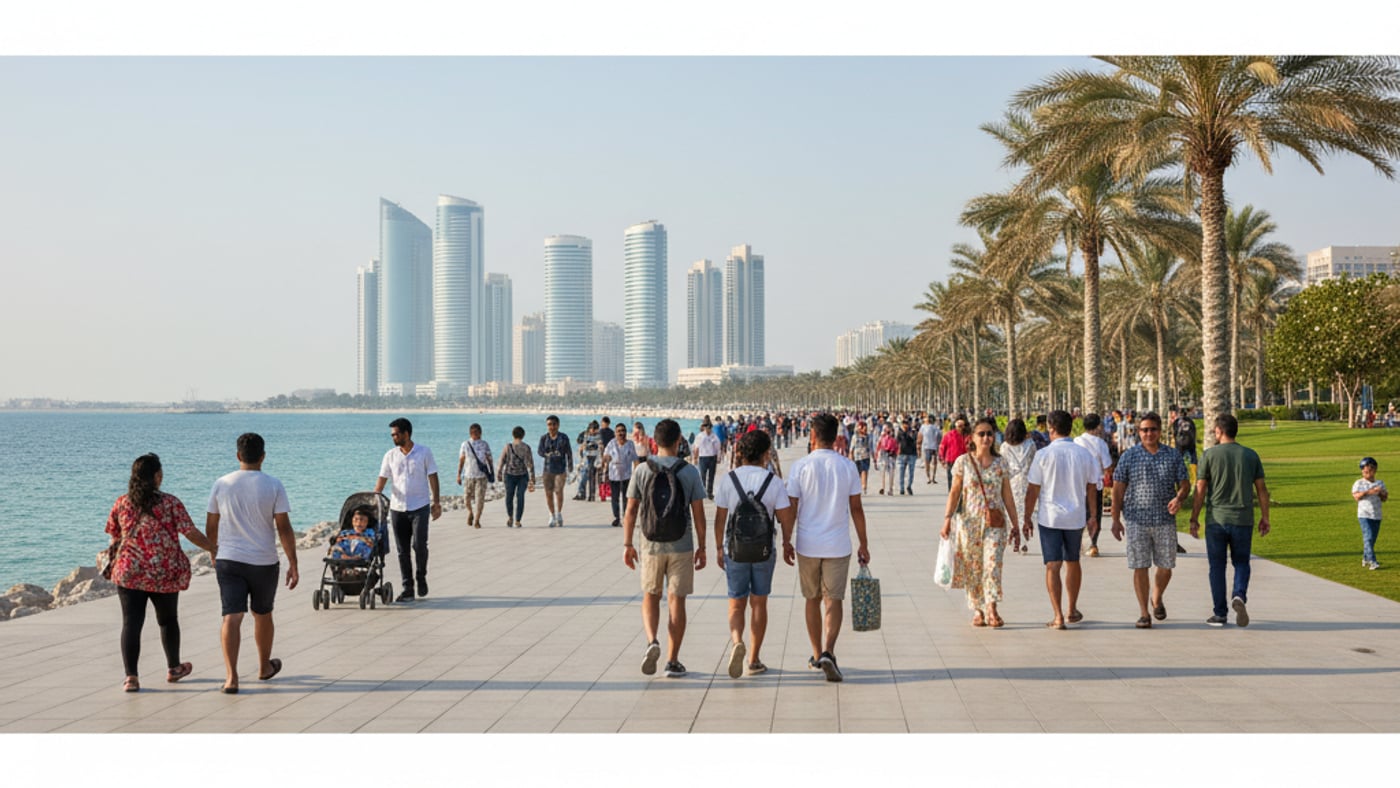
For international visitors, Abu Dhabi's winter nights are cool rather than cold. January overnight lows typically range from around 13.9C at the airport to approximately 15C-17.6C in city areas, depending on the data source. A light jacket for evenings is sensible. Thermal layers are not.
For the most accurate current picture, the National Center of Meteorology (NCM) provides live temperature, humidity, and wind readings for Abu Dhabi and the wider UAE. The team recommends checking NCM directly rather than relying on third-party aggregators for real-time conditions before heading out.
Everything above adds up to a simple truth: the best time to visit Abu Dhabi depends on what visitors plan to do when they get there. Here is how Travel Camel's team maps the climate calendar to traveller type.
Beach seekers: Visitors who prefer calm, warm water and comfortable beach afternoons will find November through March the ideal window. Sea temperatures are pleasant, the humidity is low, and spending a full day outdoors is effortless. The team recommends February as the sweet spot between winter fog and spring warmth.
Cultural explorers: Those drawn to museums, mosques, heritage sites, and the city's pedestrian quarters benefit most from the November-March window, when walking between attractions is genuinely enjoyable. December and January are busiest; shoulder months offer the same mild weather with fewer visitors sharing the space.
Desert adventurers: October and April are Travel Camel's top picks for dune-based activity - warm enough to feel authentic, cool enough for sustained physical effort. Visitors who want to combine a desert overnight with reasonable sleeping temperatures will find these months particularly rewarding. Confirm operator availability before booking.
Humidity-sensitive visitors: The team recommends considering Al Ain over coastal Abu Dhabi, particularly between October and March. The inland city's lower relative humidity - typically 30%-60% - makes the same seasonal temperatures feel far more comfortable. Al Ain's oasis, heritage sites, and quieter pace add their own reasons to make the journey inland.
Business travellers: Abu Dhabi functions year-round, and business visitors often have little choice over timing. For those with flexibility, November through February brings the most comfortable conditions for client meetings, site visits, and after-hours exploration of the city.
Abu Dhabi is not simply a hot place to visit. It is a city with a climate that rewards understanding - where knowing the difference between a dry October morning and a humid August afternoon changes everything about what a trip can be. Strategic seasonal planning is not overthinking a holiday; it is the reason some visitors return year after year while others leave having only glimpsed what the city is capable of offering.
Travel Camel's team gives every first-time visitor the same piece of advice: pick your month before you pick your hotel. The month shapes the experience. The hotel just shapes the sleep. Visitors who plan ahead - who time their arrival for a cool November afternoon, book their desert tour before the weekend slots fill, and check the NCM forecast before an early morning drive - consistently get more from Abu Dhabi than those who arrive and adapt.
The image that closes every Travel Camel conversation about this city is the same one that opens this article: a perfect November afternoon on the Corniche, the air warm but not heavy, the light going gold over the Gulf. That afternoon is waiting. The only question is when to go and claim it.
Visitors typically find conditions most comfortable between November and March, with February standing out as the team's top recommendation - mild temperatures around 24C to 28C, lower humidity, and a full calendar of events. Shoulder months such as October and April also offer good conditions with fewer crowds and generally lower rates.
January is statistically the coldest month. City-area overnight lows typically range from approximately 15C to 17.6C, with airport-area readings around 13.9C according to meteorological reference data. Visitors from cooler climates will find this pleasantly mild; a light jacket for evenings is sensible but heavy winter gear is unnecessary.
Climate reference data points to average high temperatures of approximately 39C in July and August, with official Visit Abu Dhabi sources citing figures around 41C-42C. Combined with relative humidity that can exceed 80%, the feels-like value climbs significantly higher. Outdoor activity is best reserved for early morning or after dark during these months.
Yes, though rarely. Annual rainfall totals approximately 42-56 mm across roughly 5-10 rainy days per year, with the wettest period falling in February and March. When rain does arrive, it tends to be short and intense, and limited drainage infrastructure can cause localised surface flooding. Visitors should check official meteorological sources for current forecasts.
Al Ain sits at approximately 292-311 metres above sea level and receives far less moisture from the Gulf. Its relative humidity typically ranges between 30% and 60%, compared with coastal values that regularly exceed 60%. The heat is drier and more intense in summer afternoons, but the absence of humidity makes the same temperatures feel notably more bearable for many visitors.
Abu Dhabi is predominantly warm to very hot, with no cold season by international standards. Winter months - roughly November through March - bring mild, pleasant conditions with daytime highs around 23C to 29C. Summer months bring extreme heat and high humidity. The city never experiences frost or temperatures approaching genuinely cold conditions.
Overall year-round humidity averages approximately 60%, though monthly values vary considerably - from roughly 43% in drier months to around 66% in January according to climate reference data. Humidity is highest in coastal summer conditions when the combination of heat and Gulf moisture produces a heavy, enveloping atmosphere that raises the feels-like temperature significantly above air temperature alone.
Get an instant summary or ask follow-up questions about this article in your favourite assistant.

UAE Editor at TravelCamel
Daniel moved to Dubai in 2016 and covers attractions, transport and day trips across all seven emirates. His rule for every guide: if a place is not worth the ticket, the guide says so. More guides by Daniel →