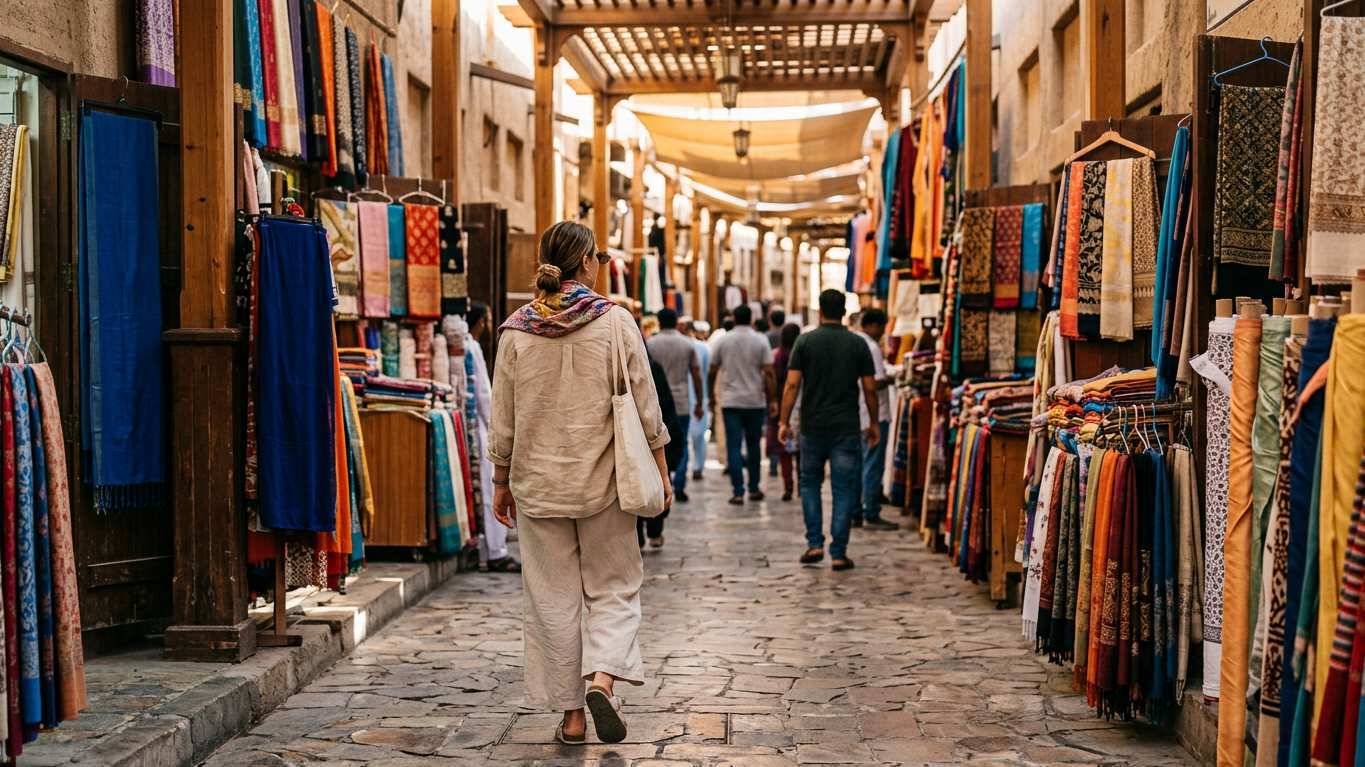
Dubai is one of the most visited cities in the world, and for good reason. The skyline, the shopping, the food: it's a genuinely impressive place to spend time. But it operates under a set of cultural and legal expectations around clothing that every tourist should understand before packing. Getting it wrong isn't just embarrassing; in some locations, it can result in fines or being asked to leave.
The good news is that the rules are straightforward once you know them. So what do you actually need to pack?
Dubai is a Muslim-majority city in the UAE, and while it's far more tolerant of Western dress than many other cities in the region, public modesty is still expected. The standard that applies in most public spaces, including streets, malls, markets, and public transport, is simple: cover your shoulders and knees. That applies to both men and women equally.
Traditional Emirati clothing isn't required. Standard modest Western dress works fine. You just need to avoid clothing that exposes too much skin in shared public spaces. The UAE Government's official tourism guidance makes clear that visitors are expected to dress modestly in public areas as a matter of respect for local customs.
Women have the most to think about when planning outfits for Dubai. Dress expectations vary by setting:

Men face fewer restrictions overall, but the same core principle applies. Shorts that fall above the knee are acceptable at beaches and resorts but look out of place in malls or traditional areas of the city. T-shirts are fine throughout Dubai, and lightweight linen shirts work particularly well given the heat. Sleeveless vests and tank tops belong at the pool, not on the street or in shopping centres.
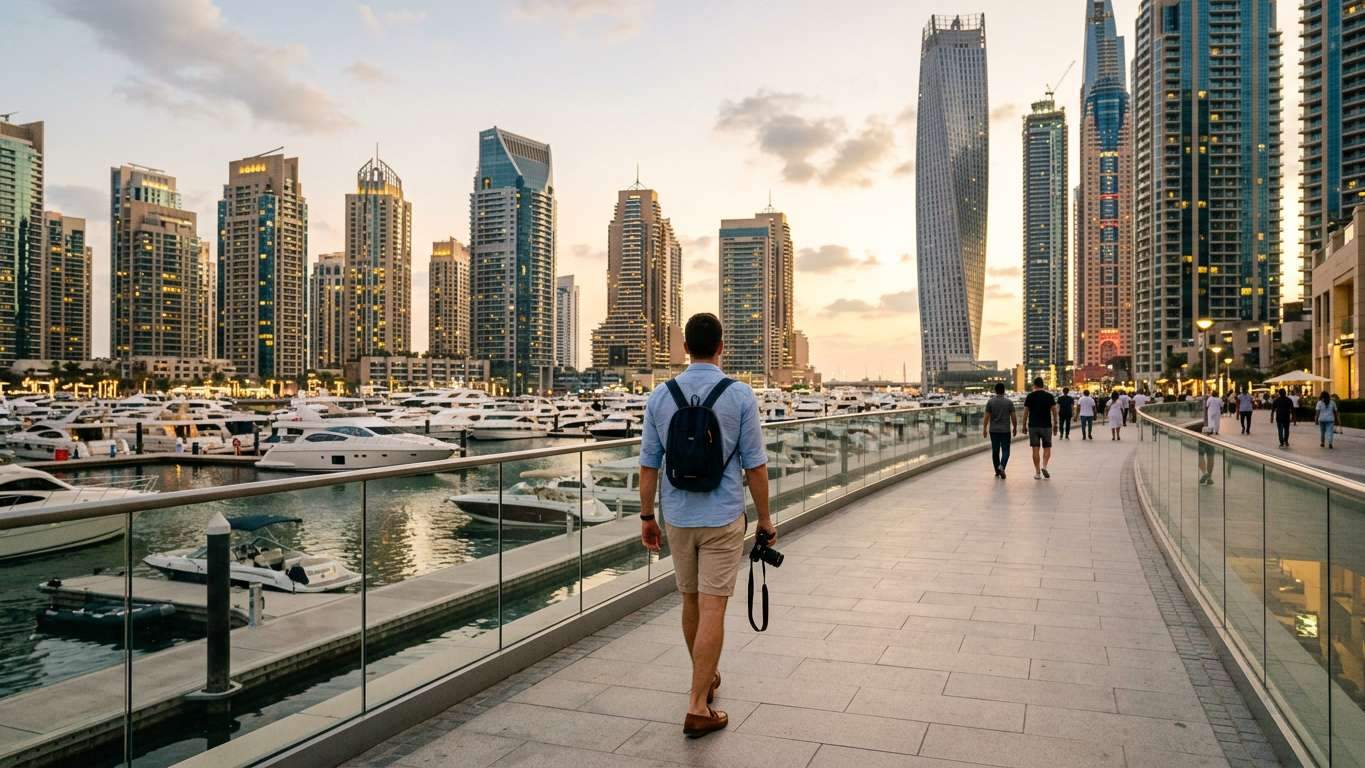
Smart casual clothing covers almost every situation a male tourist will encounter. For evenings out at nicer restaurants or rooftop bars, long trousers and a collared shirt are a sensible choice. For mosques, men need long trousers and a top that covers the shoulders fully. Sandals are acceptable in most settings, though some higher-end venues prefer closed shoes.
Not every part of Dubai operates the same way, and it's worth knowing the difference before you head out. Tourist-heavy zones like Dubai Marina, Jumeirah Beach Residence (JBR), and Downtown Dubai are noticeably more relaxed about dress. You'll see a wide range of clothing styles in these areas without any issues.
Traditional areas like Deira, Al Fahidi, and the older souks expect more conservative dress from visitors. These neighbourhoods are working communities, not tourist attractions built around Western expectations. Dressing more modestly there shows basic awareness of where you are. Religious sites always require full coverage regardless of your location in the city, and this is non-negotiable.
The Dubai Tourism official guidance also notes that public beaches outside of hotel resort areas have their own expectations, and overly revealing clothing away from designated swimming zones can attract official attention.
Key takeaways
Certain clothing choices can cause real problems regardless of where you are in Dubai. Avoid anything with offensive graphics, profanity, or imagery that contradicts Islamic values. Transparent clothing without proper coverage underneath is not acceptable in public spaces. Overly tight or revealing outfits in non-tourist areas can draw official attention from police or mall security.
Cross-dressing is illegal in the UAE under federal law, and penalties apply. Enforcement does occur, including in tourist areas.
You don't need a completely separate wardrobe for this trip. A few lightweight layers, a couple of longer trousers or skirts, and a scarf or two will cover most situations you'll encounter. Linen and cotton are practical choices given that temperatures regularly exceed 35C between June and September. Breathable fabrics that still provide coverage are easy to find and make the heat manageable.
Think of it less as restriction and more as adaptation. You'd dress differently for a formal dinner than a beach day at home too. Dubai is genuinely welcoming to tourists, and respecting local dress expectations is a small effort that makes the experience smoother for everyone involved.
| Location | Women | Men |
|---|---|---|
| Malls and streets | Shoulders and knees covered | Shorts to the knee, t-shirts fine |
| Beach and pool | Swimwear acceptable | Swimwear acceptable |
| Restaurants and bars | Smart casual, some skin acceptable | Smart casual |
| Souks and markets | Conservative, arms and legs covered | Long trousers preferred |
| Mosques | Full coverage, headscarf required | Long trousers, shoulders covered |
What is the dress code in Dubai?
Cover shoulders and knees in malls, streets, and traditional areas. Swimwear is only acceptable at beaches and hotel pools. Religious sites require full coverage for both men and women at all times.
What should female tourists wear in Dubai?
Loose trousers, midi skirts, or dresses covering knees and shoulders work well across most settings. Carry a light scarf for markets and mosques. Standard swimwear is fine at designated beach and pool areas.
Can you wear shorts in Dubai?
Yes, but they should reach the knee in public spaces like malls and streets. At beaches and hotel pools, shorter shorts and standard swimwear are perfectly acceptable without any issues.
What is not allowed to wear in Dubai?
Transparent, overly revealing clothing and items with offensive graphics are not permitted in public. Cross-dressing is illegal under UAE federal law. Bikinis and swimwear must stay within beach and pool areas only.
What do you wear to a mosque in Dubai?
Full coverage is required: long sleeves, trousers or a skirt to the ankle, and a headscarf for women. Many mosques provide abayas at the entrance for visitors who arrive without appropriate clothing.
Get an instant summary or ask follow-up questions about this article in your favourite assistant.

UAE Editor at TravelCamel
Daniel moved to Dubai in 2016 and covers attractions, transport and day trips across all seven emirates. His rule for every guide: if a place is not worth the ticket, the guide says so. More guides by Daniel →