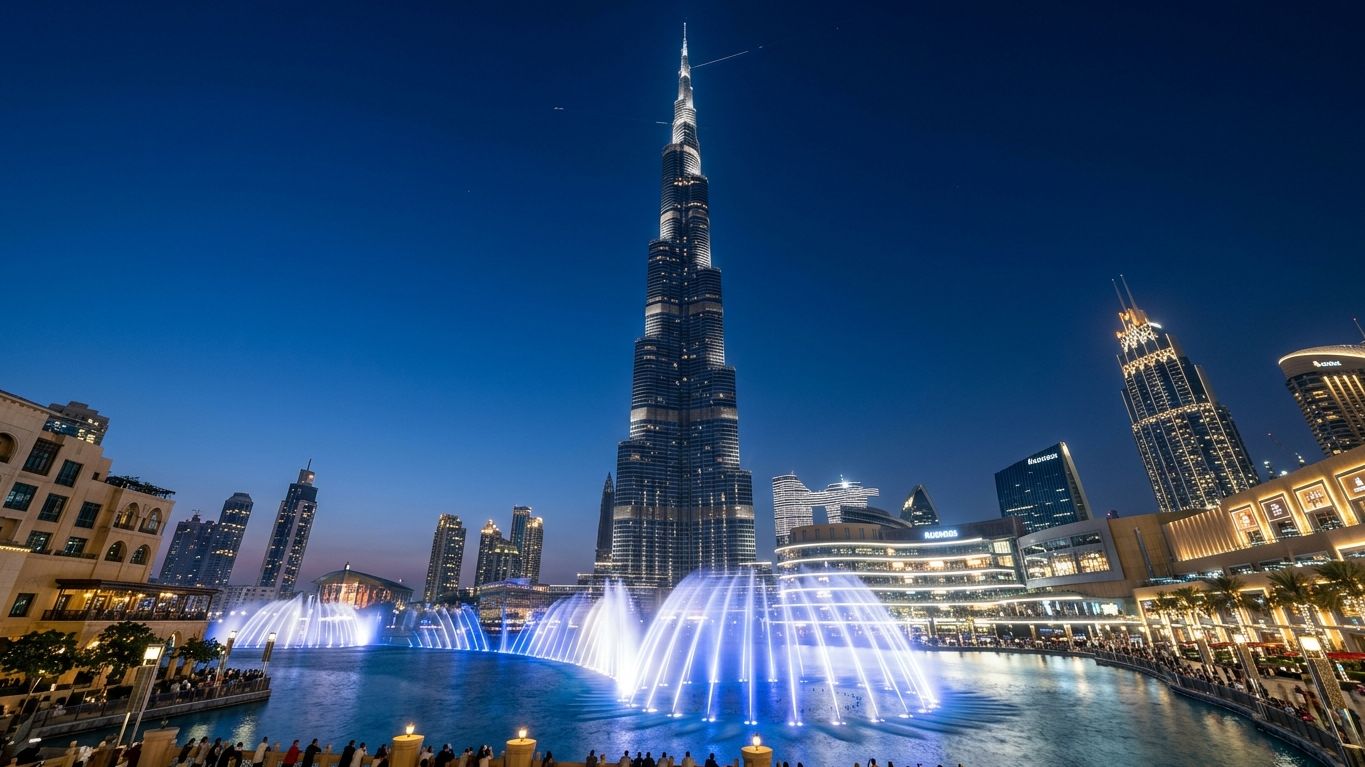
Dubai doesn't ease you in gently. The city hits you with scale, ambition, and sheer contrast all at once: the world's tallest building looming over a centuries-old creek, a ski slope inside a mall, desert dunes less than an hour from the beach. If you're planning your first visit, or even your second, knowing where to focus your time makes a real difference. This guide covers what's actually worth it.
Start here. The Burj Khalifa stands at 828 metres and remains the tallest structure on the planet. You have two main observation deck options: At the Top (floors 124 and 125) and At the Top SKY (floor 148). The SKY experience costs more but offers an unobstructed 360-degree view that's genuinely hard to describe until you're standing there.
Book tickets in advance. Walk-up pricing is significantly higher, and sunset slots sell out days ahead during peak season. Tickets range from 149 to 399 AED depending on the tier and time of day.
Right below the tower, the Dubai Fountain runs shows every 30 minutes from 6pm. It's free to watch from the boardwalk, and the combination of the lit-up tower and the 275-metre fountain arcs makes for one of the better free experiences in the city.
The Dubai Mall sits adjacent to the fountain. Even if shopping isn't your goal, the mall contains an aquarium with a walk-through tunnel, an Olympic-sized ice rink, and a real dinosaur skeleton in the atrium. You could spend three hours here and never enter a single shop.
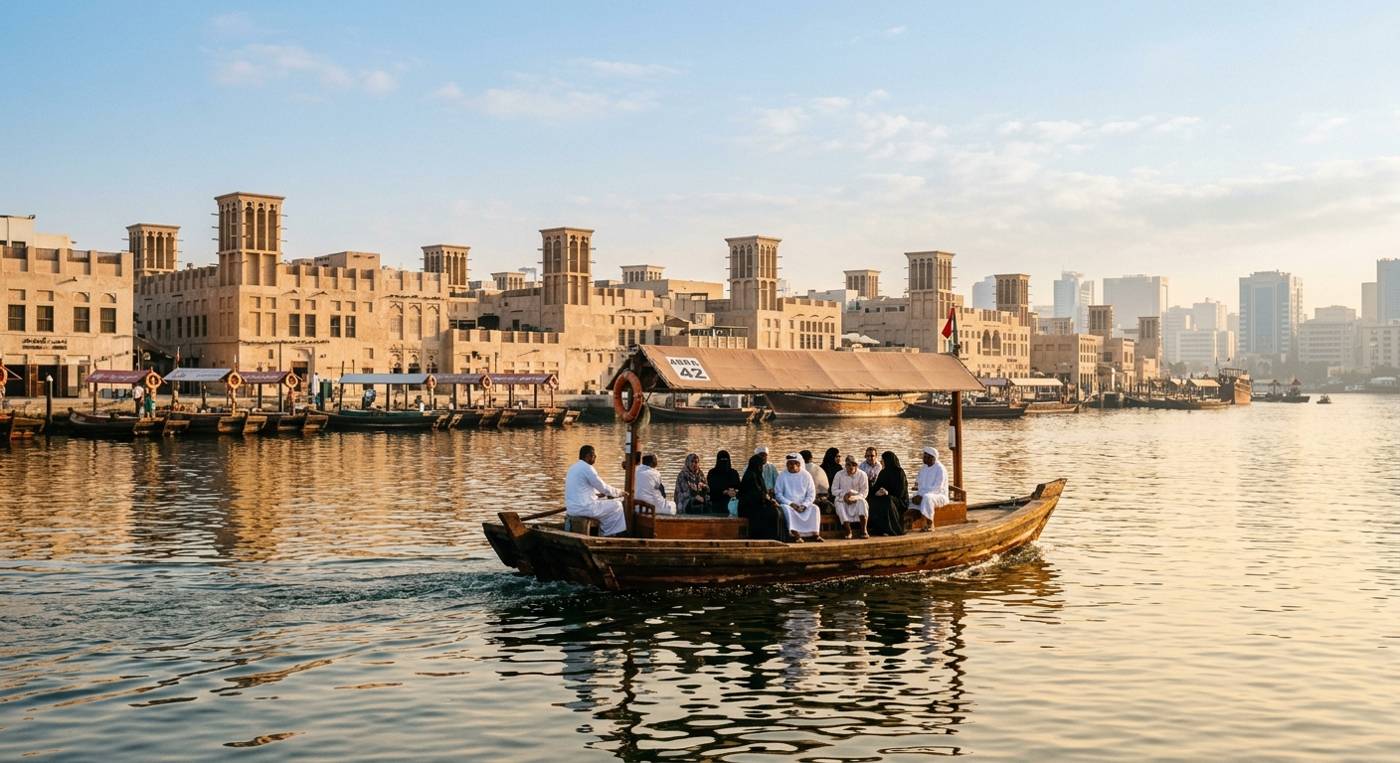
This is the part of Dubai that most first-timers underestimate. The Al Fahidi Historical Neighbourhood (sometimes called Bastakiya) is a preserved quarter of wind-tower architecture dating to the late 19th century. The lanes are narrow and the buildings are low. Wander for long enough and it feels completely removed from the glass towers a few kilometres away, which is exactly the point.
To reach the Deira side, cross Dubai Creek by abra, the traditional wooden water taxi. The fare is 1 AED. From the landing point, the Gold Souk and Spice Souk are both within easy walking distance of each other.
The Gold Souk reportedly holds around 10 tonnes of gold on display at any given time across its 300-plus retailers. You don't need to buy anything to find it worth the visit. The Spice Souk is smaller, but the smell alone makes it memorable: saffron, dried limes, frankincense, and rose petals piled in open sacks along every aisle.
Practical tip: Go to Old Dubai in the morning or early evening. Midday heat in summer makes walking between souks genuinely uncomfortable, and most of the atmosphere comes from the bustle of the crowd rather than the buildings themselves.
The Palm Jumeirah is an artificial island shaped like a palm tree, and it's one of those things that sounds gimmicky until you're actually on it. The Atlantis resort at the tip of the palm is the main draw for most visitors. Aquaventure Waterpark, which covers 17 hectares and includes over 105 rides and slides, is one of the most visited waterparks in the Middle East, and the resort's private beach is open to day visitors who purchase a pass.
Want the view without the price tag? The Palm Monorail runs from the Gateway Towers to Atlantis and back for a few dirhams. Several rooftop restaurants along the trunk offer good views of the Dubai Marina skyline from across the water.
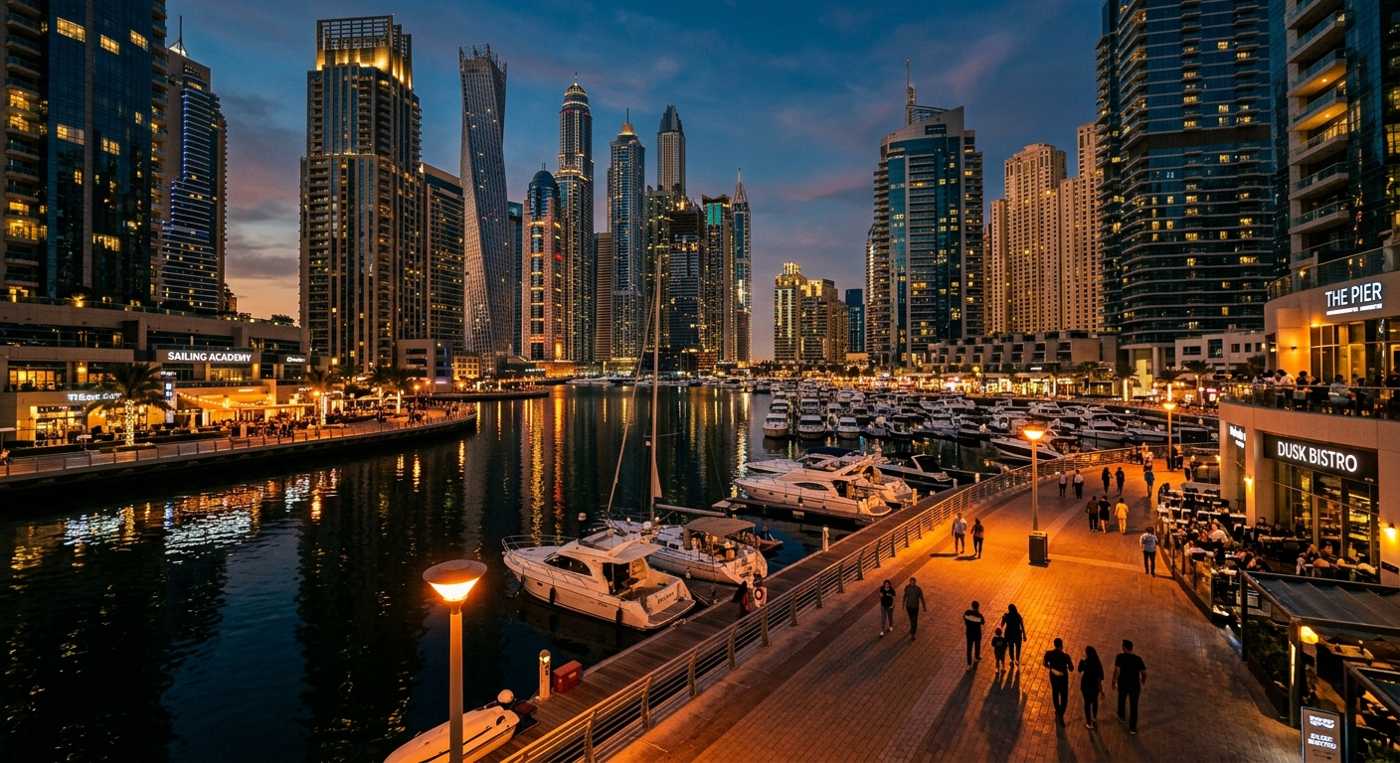
Dubai Marina is a purpose-built waterfront district with a 3.5-kilometre walkway lined with restaurants, cafes, and boat tours. It's one of the more liveable-feeling parts of the city, and in the evening the promenade fills up with a mix of residents and visitors.
The Jumeirah Beach Residence (JBR) stretch connects directly to the Marina and has a wide public beach. This is where you actually swim. The water is warm for most of the year, and the beach is well-maintained with sun lounger rentals available.
For a different perspective on the Marina, a 90-minute dhow cruise at night costs around 100 to 150 AED (prices approximate, subject to change) and typically includes dinner. It's a relaxed way to see the skyline from the water, and far less crowded than the boardwalk.
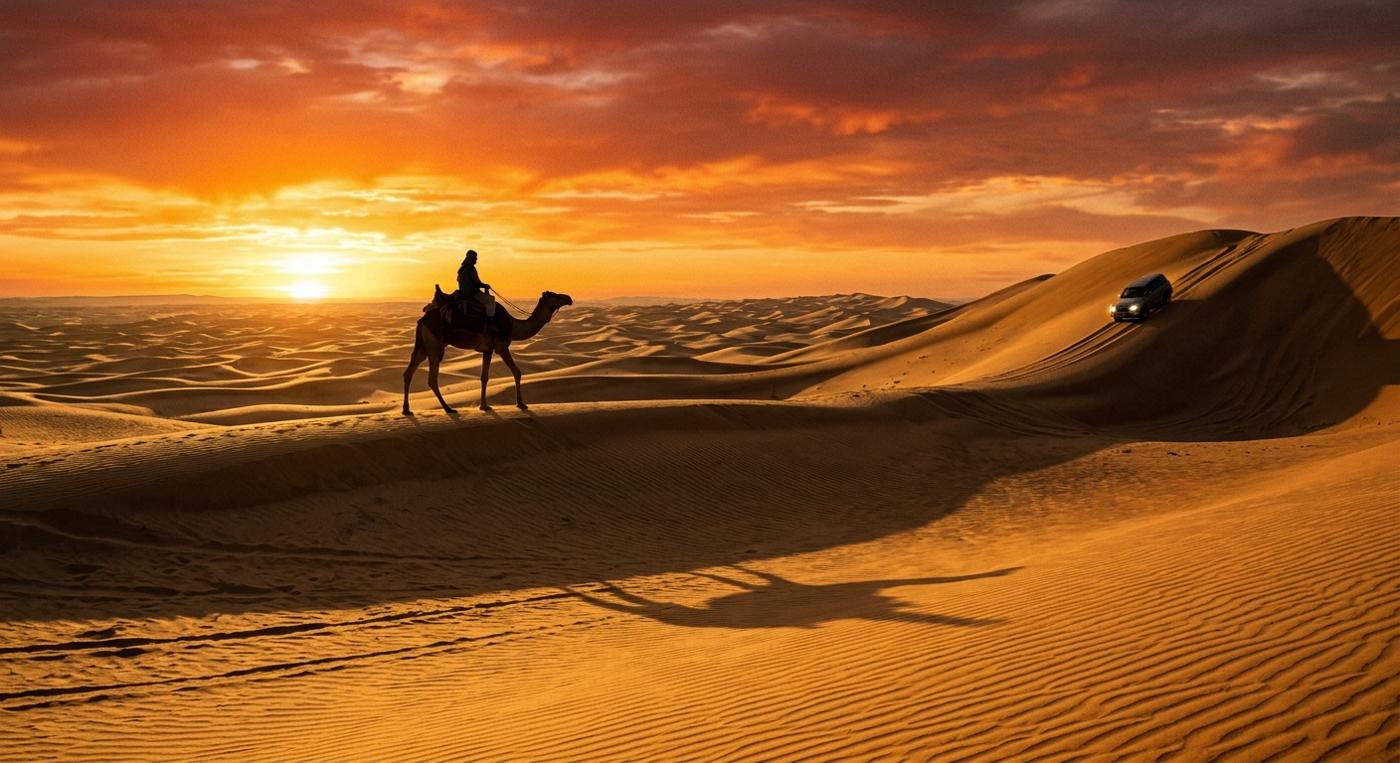
No visit to Dubai is complete without at least a half-day in the desert. The dunes start roughly 45 minutes outside the city. Most operators offer two main windows: morning departures and evening departures, each with a different character.
Evening safaris are the most popular option. They usually combine dune bashing by 4WD, camel riding, sandboarding, and a dinner at a Bedouin-style camp with live entertainment. Morning safaris run at a slower pace and are better for photography, particularly in the soft early light before the heat builds.
A few operators worth knowing:
Evening safari pricing typically runs from 150 to 400 AED per person depending on the operator and inclusions (prices approximate as of 2024). Departure times vary by operator and season but generally fall in the mid-to-late afternoon. The desert and the beach are both accessible in a single day if you plan carefully. A morning beach session at JBR followed by an evening desert safari is a workable combination, though it makes for a long day.
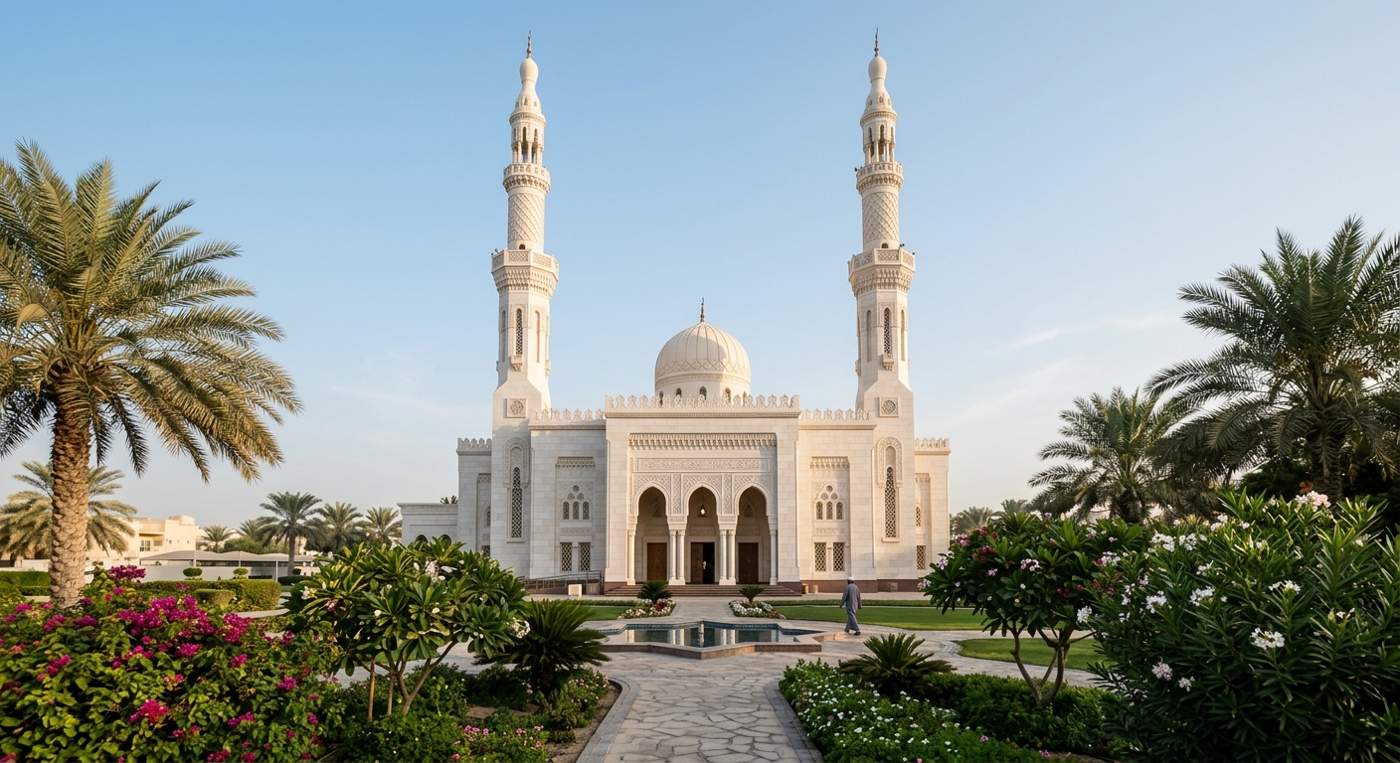
The Jumeirah Mosque is one of the few mosques in Dubai open to non-Muslim visitors. Guided tours run most mornings and last about 75 minutes. The Sheikh Mohammed Centre for Cultural Understanding organises these tours and also hosts traditional Emirati breakfasts where you can ask questions about local customs, religion, and daily life. Entry costs 35 AED per person (verify current pricing at the official site before visiting).
It's one of the more genuinely educational experiences available in the city. If you want to understand Dubai beyond the skyline, this is where to start.
| Attraction | Best time to visit | Approx. cost |
|---|---|---|
| Burj Khalifa (At the Top) | Sunset, pre-booked | 149-399 AED |
| Dubai Fountain | 6pm onwards | Free |
| Al Fahidi + Creek Abra | Morning | 1 AED (abra) |
| Gold Souk | Morning or evening | Free to browse |
| Palm Jumeirah / Atlantis | Morning | Varies |
| Desert safari (evening) | Mid-to-late afternoon departure | 150-400 AED |
| Jumeirah Mosque tour | Morning | 35 AED |
| JBR Beach | Morning or evening | Free |
All prices are approximate and subject to change. Confirm current rates directly with operators or official sites before booking.
Three days covers the essentials without feeling rushed. Four to five days lets you add day trips, slower mornings, and the option of a visit to Abu Dhabi (approximately 90 minutes from central Dubai by road, depending on traffic), where the Sheikh Zayed Grand Mosque is one of the most architecturally impressive buildings in the entire region.
Two days is possible but means making real choices. You can't do the desert, Old Dubai, Downtown, and the beach in 48 hours and come away feeling like you've actually seen the place rather than ticked boxes.
Key takeaways:
What is the number one thing to see in Dubai?
The Burj Khalifa observation deck is the single most visited attraction. Views from floor 124 or 148 give you the full scale of the city at once. Book the sunset slot in advance and factor in time for the Dubai Fountain show directly below.
How many days do you need to see Dubai's main attractions?
Three days covers the essentials: Downtown and the Burj Khalifa, Old Dubai and the souks, plus a desert safari. Four or five days is better if you want to include the Palm, JBR Beach, a cultural visit, and a potential day trip to Abu Dhabi without feeling rushed.
Is Dubai worth visiting for non-shoppers?
Dubai is absolutely worth visiting without shopping as a priority. The desert, the creek, Al Fahidi, the mosque tours, the beach, and the skyline views are all either free or low-cost and don't require setting foot in a shopping centre.
What's the best time of year to visit Dubai?
November through March offers the most comfortable weather, with daytime temperatures between 20 and 28C. April and October are transitional and manageable. May through September is extremely hot (40C and above), which limits outdoor activities significantly, though indoor attractions remain fully accessible year-round.
Can you see the desert and beach in the same day?
A morning swim at JBR Beach followed by an afternoon desert safari is a standard combination that many visitors do in a single day. Leave the beach by early afternoon and you'll comfortably make a typical mid-to-late afternoon safari departure with time to spare.
Is a day trip to Abu Dhabi worth it from Dubai?
The Sheikh Zayed Grand Mosque alone makes it worthwhile. It's roughly 90 minutes from central Dubai by road (traffic dependent), entry has historically been free, and the architecture is genuinely unlike anything else in the region. Ferrari World and the Louvre Abu Dhabi are nearby if you want to extend the day further.
Get an instant summary or ask follow-up questions about this article in your favourite assistant.

UAE Editor at TravelCamel
Daniel moved to Dubai in 2016 and covers attractions, transport and day trips across all seven emirates. His rule for every guide: if a place is not worth the ticket, the guide says so. More guides by Daniel →