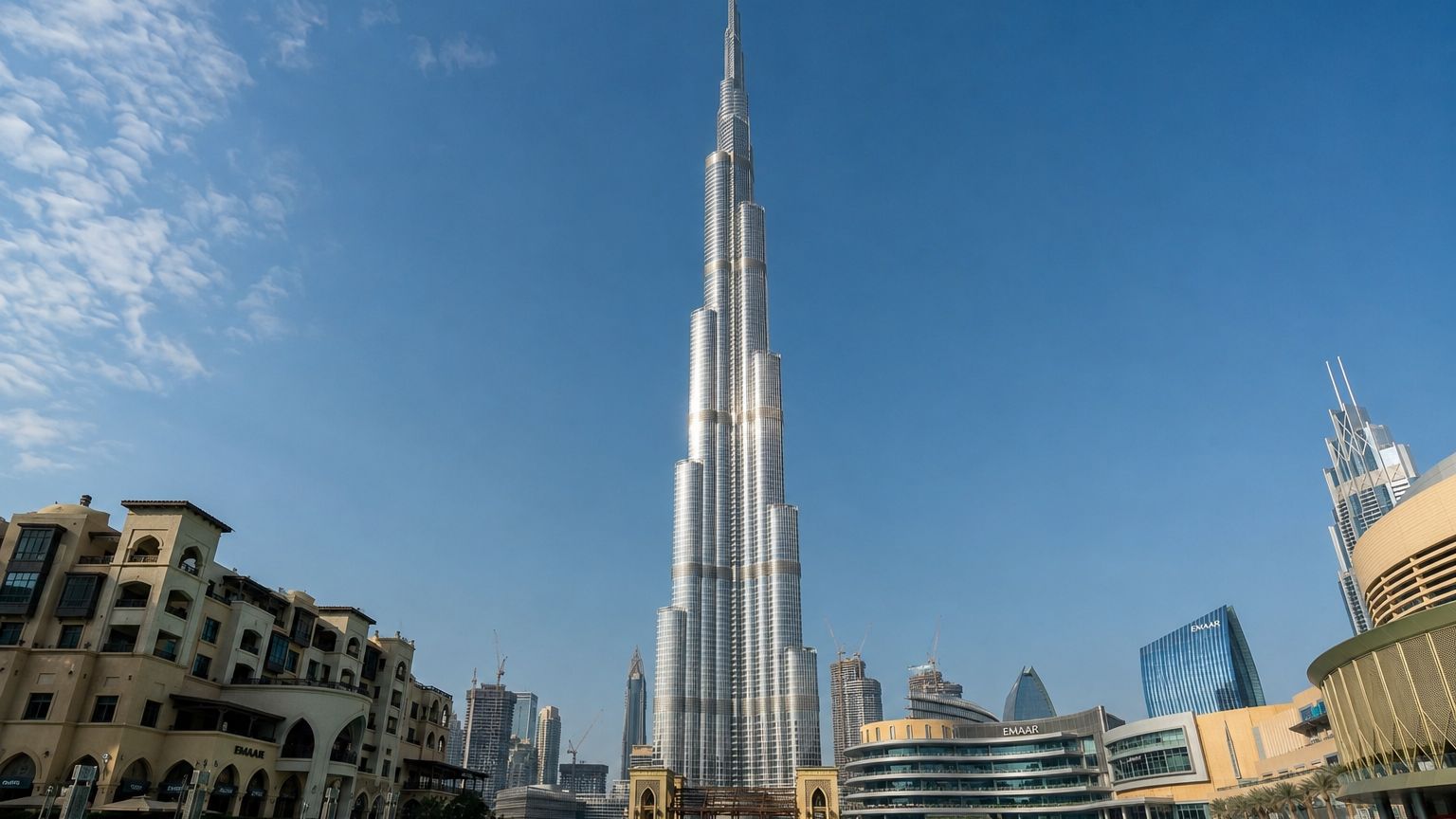
Standing 828 meters above Dubai, the Burj Khalifa is the tallest building on Earth. That single fact draws millions of visitors every year, but the actual experience of going there requires more planning than most people expect. Ticket prices vary widely, observation decks differ significantly, and the time of day you visit changes everything. Here is how to make the most of it.
The Burj Khalifa tops out at 828 meters (2,717 feet), including its spire. The structure has 163 floors above ground. It also has more floors than any other skyscraper on the planet. Construction ran from 2004 to 2010, and the building officially opened on January 4, 2010.
| Fact | Detail |
|---|---|
| Total height | 828 m (2,717 ft) |
| Floors above ground | 163 |
| Floors below ground | 2 |
| Year completed | 2010 |
| Architect | Adrian Smith (SOM) |
| Developer | Emaar Properties |
| Observation decks | Levels 124/125 and 148 |
| Fastest elevator speed | 10 m/s |
The building was designed by Adrian Smith at Skidmore, Owings and Merrill (SOM). Its Y-shaped floor plan draws on the geometry of a desert flower native to the region, the Hymenocallis. That shape isn't purely decorative. It distributes wind load efficiently, which was a central engineering requirement at that height. The structural engineering was led by Bill Baker, also at SOM, whose buttressed core system was specifically developed to handle the lateral forces acting on a tower of this scale.
The main contractor was Samsung C&T Corporation, working alongside Besix and Arabtec. At peak construction, over 12,000 workers were on site daily. More than 330,000 cubic meters of concrete went into the structure, along with 39,000 tonnes of steel rebar.
There are two distinct visitor experiences inside the Burj Khalifa, and they're priced very differently.
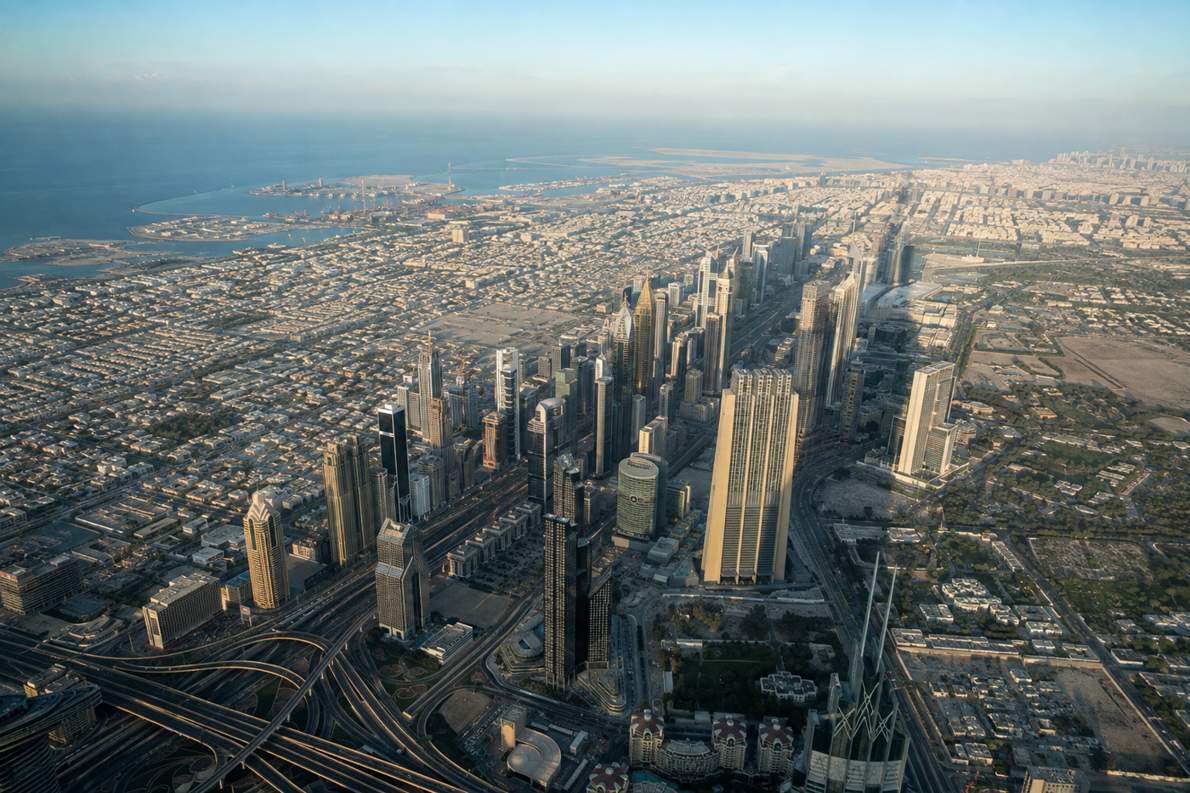
At the Top (floors 124 and 125) is the standard option. Floor 124 has an indoor observation area with floor-to-ceiling windows and telescopes. Floor 125 is an open-air terrace. On a clear day you can see the Palm Jumeirah, the Dubai Creek coastline, and on exceptional days, the Hajar Mountains more than 100 kilometers away in Oman.
At the Top SKY (floor 148) sits 555 meters above ground and is the higher-end experience. Capacity is capped at around 27 people at a time. The ticket includes a personal host, welcome drinks, and access to a private lounge before the ascent. The view from floor 148 is noticeably different from floors 124/125 because you're above the surrounding tower cluster, so the skyline spreads out rather than looming around you.
Which deck should you choose? If budget is a concern, floors 124/125 deliver a genuinely impressive experience. Floor 148 is worth the premium if you want smaller crowds and a more curated visit, but the view difference is incremental rather than transformational. Most first-time visitors find floors 124/125 more than sufficient.
Prices depend on deck level, time of day, and how far in advance you book. The Burj Khalifa uses dynamic pricing, so the same ticket can cost significantly more if you buy it on the day.
| Ticket type | Advance price (approx.) | At-the-door price (approx.) |
|---|---|---|
| At the Top (124/125) non-prime hours | AED 149-169 | AED 200-220 |
| At the Top (124/125) prime (sunset/night) | AED 200-249 | AED 270-300 |
| At the Top SKY (148) | AED 499-599 | AED 650+ |
All prices are approximate and subject to change. Book through the official Emaar ticketing site or the Burj Khalifa website to avoid third-party markups. Children under 3 enter free. Children aged 3 to 12 get a discounted rate on standard tickets.
Prime hours, meaning sunset and the first two hours after dark, consistently command the highest prices and sell out days in advance during peak season (October through April). If you're visiting in November or December, sunset slots can disappear more than a week ahead of time.
Time of day matters more than most visitors realize. Daytime visits give you the clearest long-distance views. After dark, the cityscape shifts entirely: Downtown Dubai, the Dubai Fountain, and the coastal developments all light up at once, and the contrast between the illuminated grid below and the black desert beyond is striking. Sunset is the sweet spot because you get both. Plan to arrive about 30 minutes before the listed sunset time to secure a good spot on the outdoor terrace.
Season is the other key variable. Dubai's summer (June through September) brings temperatures above 40C. The indoor observation areas are air-conditioned, but the outdoor terrace at floor 125 becomes genuinely uncomfortable in those months. October through April is far more pleasant. The air also tends to be clearer during winter months, which improves visibility for long-distance views considerably.
Weekday vs. weekend also shifts the experience. Thursday evenings and Fridays are the busiest periods. A Sunday or Monday morning visit during the off-peak season means noticeably thinner crowds, shorter queues at the elevators, and more room on the outdoor terrace. If you're flexible on timing, that combination is hard to beat.
Book directly through the official Burj Khalifa website (burjkhalifa.ae). Select your date, choose a time slot, pick your deck level, and pay online. You'll receive a QR code to scan at the entrance. The whole process takes about five minutes.
Third-party resellers do sell tickets, but they often charge 20 to 40 percent above face value. Stick to the official channel unless you're booking through a verified tour operator that includes the ticket as part of a broader package.
The Burj Khalifa sits inside the Downtown Dubai district. The nearest metro station is Burj Khalifa/Dubai Mall on the Red Line. From there it's about a 10-minute walk through the Dubai Mall, which connects directly to the tower's lobby. This is the easiest and cheapest option by a significant margin.
By taxi or rideshare (Careem, Uber), drop-off is at the Dubai Mall entrance or the dedicated Burj Khalifa drop-off point. Parking is available at the Dubai Mall, but traffic around Downtown Dubai on weekend evenings is heavy and finding a space can add 20 to 30 minutes to your journey.
Check-in happens at the Burj Khalifa lobby on the lower ground floor of the Dubai Mall, at the entrance marked "At The Top." Staff scan your QR code, and you proceed through a short multimedia exhibit about the building's construction history before boarding the elevators.
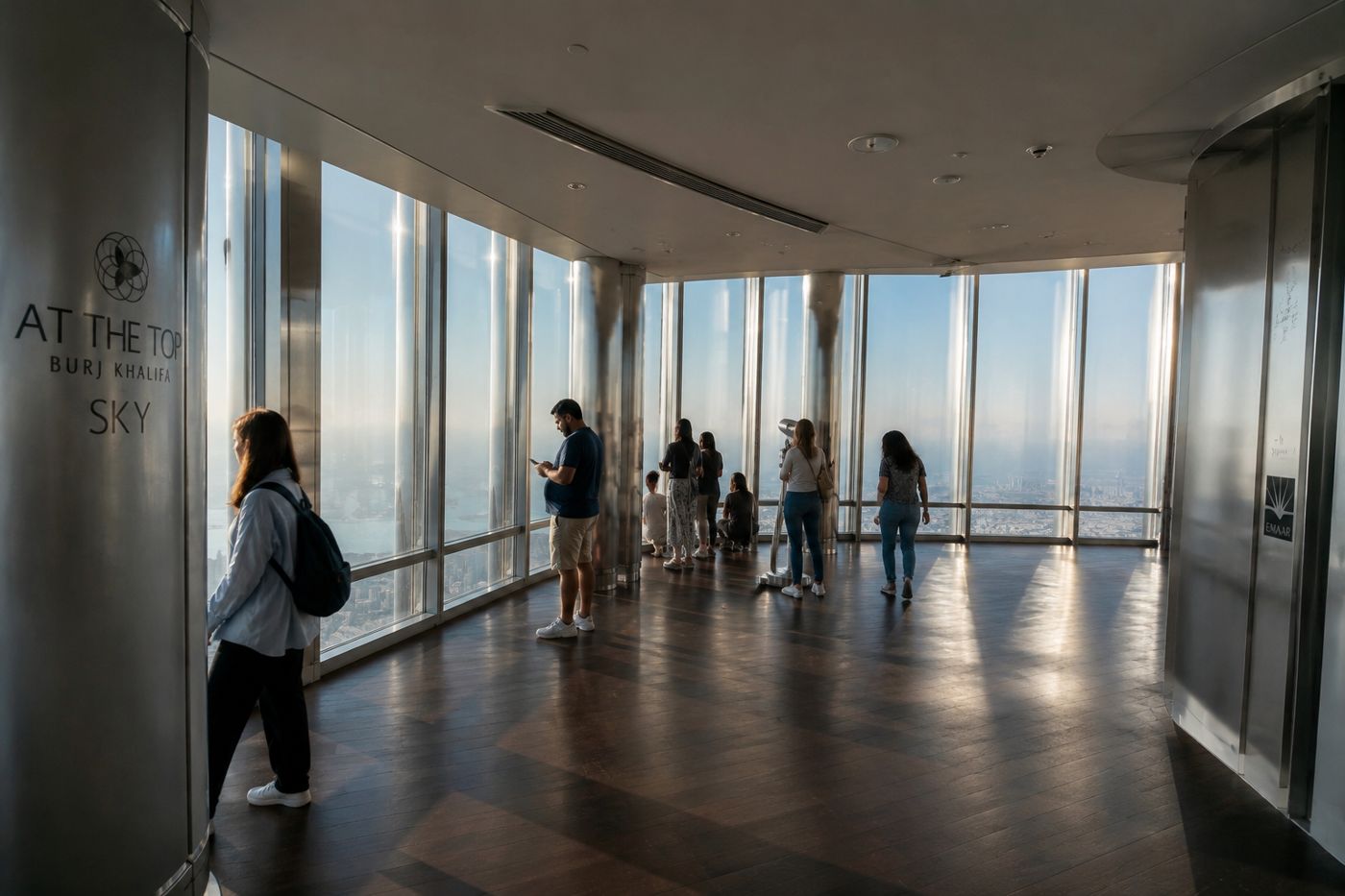
The elevators travel at 10 meters per second. The ascent to floor 124 takes roughly 60 seconds. Your ears will pop. The doors open onto the indoor observation level, where floor-to-ceiling glass gives you an unobstructed panorama in every direction.
Most visitors spend 45 to 75 minutes across the observation floors. There's a cafe on floor 122 (Atmosphere) if you want to extend the visit, though dining there requires a separate reservation and is priced at premium restaurant rates. It's worth noting that Atmosphere holds the Guinness World Record for the highest restaurant from ground level.
Photography is unrestricted on the observation decks. The glass is clean and angled to reduce reflections, which makes shooting easier than at many other observation decks around the world. A wide-angle lens or a phone's ultra-wide mode works well for capturing the full spread of the city below. If you're shooting after dark, a phone with a dedicated night mode will handle the low light better than a standard lens.
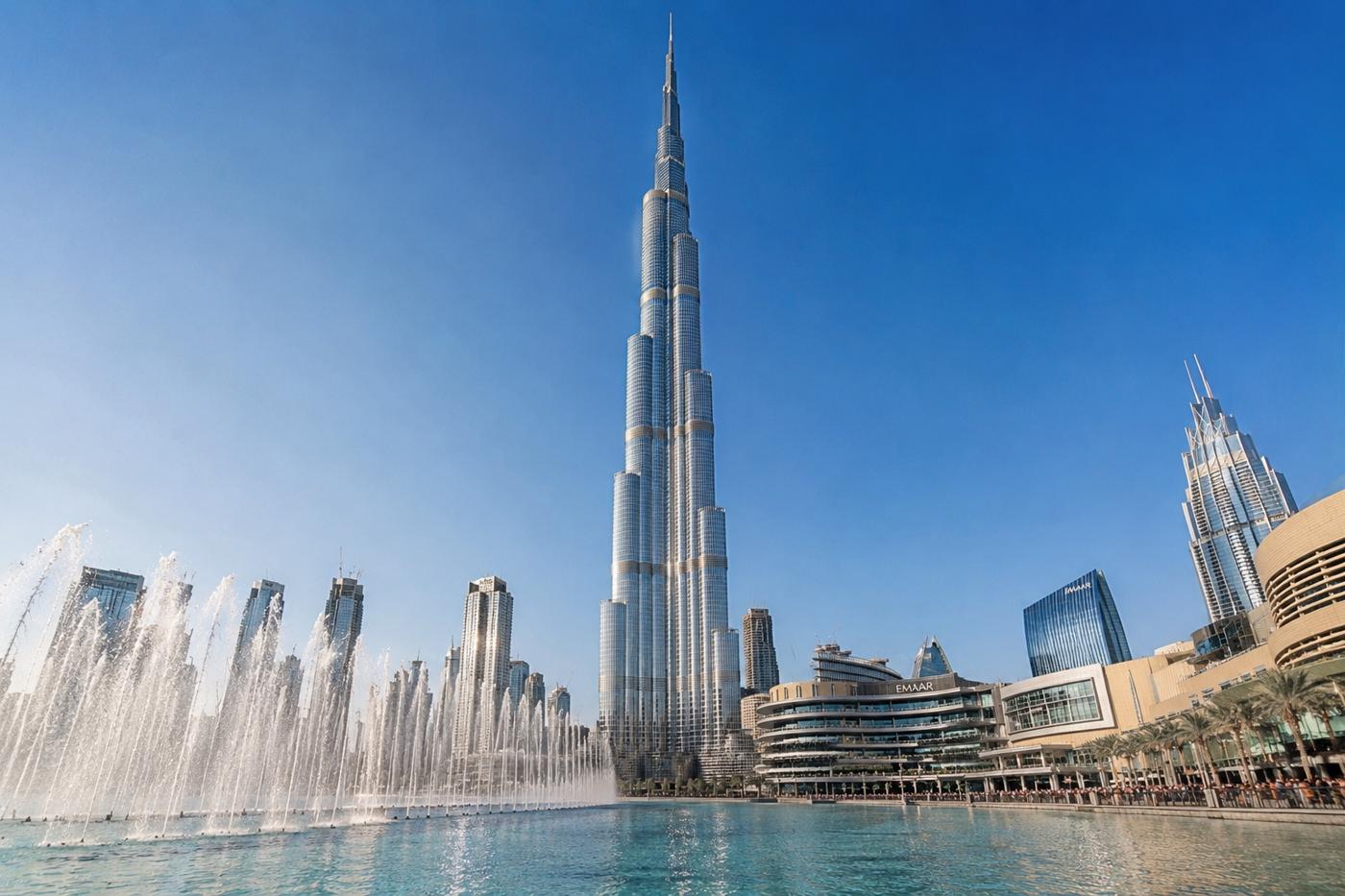
The Dubai Fountain runs every 30 minutes from 6:00 PM to 11:00 PM on weekdays and from 1:00 PM on weekends. It's directly below the Burj Khalifa on Burj Lake, and it's free to watch from the waterfront promenade. Timing your Burj Khalifa visit to finish just before 6:00 PM lets you walk straight out to the first fountain show of the evening.
The Dubai Mall shares the same complex and is one of the largest shopping centers in the world by total area. The Dubai Aquarium and Underwater Zoo inside the mall is a reasonable add-on if you're visiting with children. The aquarium tank holds 10 million liters of water and is one of the largest suspended aquariums on the planet.
For a different perspective on the tower itself, the rooftop of the Address Downtown hotel offers an unobstructed view of the Burj Khalifa's full height. It's a popular spot for photographers who want to frame the building against the sky rather than look down from inside it.
The Burj Khalifa is 828 meters (2,717 feet) tall, including its spire. That makes it the tallest structure in the world. The highest occupied floor sits at 584 meters above ground, and the spire itself accounts for a significant portion of the total height above the roof level.
Tickets start at AED 149 for floors 124/125 booked in advance, rising to AED 200 or more for prime sunset slots and at-the-door purchases. The premium At the Top SKY experience on floor 148 costs AED 499 to 650 or more depending on timing and availability.
Sunset visits offer the best combination of daytime clarity and nighttime spectacle. Arrive 30 minutes before sunset to secure a spot on the outdoor terrace. October through April is the best season overall, with cooler temperatures and better air clarity for long-distance views.
Yes, as of 2026 the Burj Khalifa remains the tallest building in the world at 828 meters. The Merdeka 118 in Kuala Lumpur (678 meters) is the second tallest. The Jeddah Tower in Saudi Arabia, when completed, is projected to surpass it.
Book directly at burjkhalifa.ae to get the best prices and avoid third-party markups. Select your date, time slot, and deck level, then pay online. You'll receive a QR code for entry. Book 3 to 5 days ahead during peak season.
The Burj Khalifa has 163 floors above ground and 2 basement levels. The building contains residential apartments, corporate offices, the Armani Hotel on floors 1 to 8 and 38 to 39, and two public observation decks at floors 124/125 and 148.
Adrian Smith designed the Burj Khalifa while at Skidmore, Owings and Merrill (SOM). Structural engineering was led by Bill Baker, also at SOM. Developer Emaar Properties commissioned the project, with Samsung C&T Corporation, Besix, and Arabtec as the main contractors.
Get an instant summary or ask follow-up questions about this article in your favourite assistant.

UAE Editor at TravelCamel
Daniel moved to Dubai in 2016 and covers attractions, transport and day trips across all seven emirates. His rule for every guide: if a place is not worth the ticket, the guide says so. More guides by Daniel →