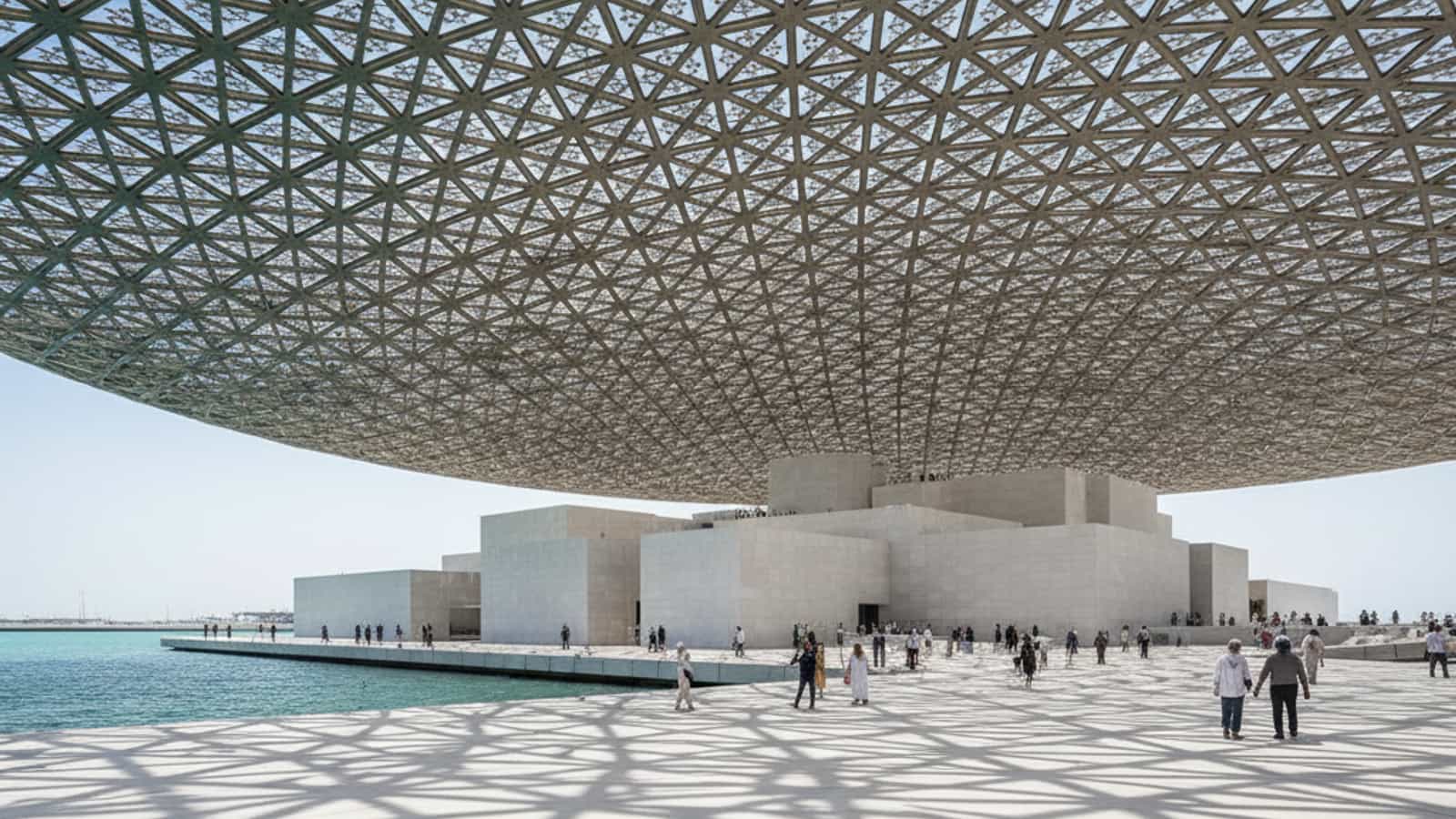
Everything first-time visitors need to know about Louvre Abu Dhabi: the architecture, the collection, ticket prices, opening hours, and how the museum connects to the wider Saadiyat Cultural District.
Travellers stepping onto the promenade at Saadiyat Island sometimes stop mid-stride. Above them, the dome of Louvre Abu Dhabi throws thousands of shifting light points across the water and stone below - an effect so quietly dramatic it takes a moment to process. Opened in November 2017 on Saadiyat Island in the United Arab Emirates, this guide covers everything first-time visitors need: the architecture, the collection, ticket prices, opening hours, and how the museum connects to the wider Saadiyat Cultural District. France's cultural partnership with Abu Dhabi made it possible; what follows explains why that matters and how to make the most of a visit.
Travellers often arrive expecting a branch of the Paris Louvre transplanted to the Gulf. What they find is something quite different. Louvre Abu Dhabi is an independent institution built around a cross-civilisation narrative - one that places a Tang dynasty figurine beside a Renaissance painting and asks visitors to look for what connects them rather than what separates them. Architect Jean Nouvel designed the building; the Agence France-Museums consortium coordinates the French institutional partnerships that give the collection its remarkable range. Three elements define the experience: the dome, the collection structure, and the Franco-Emirati agreement that underpins both.
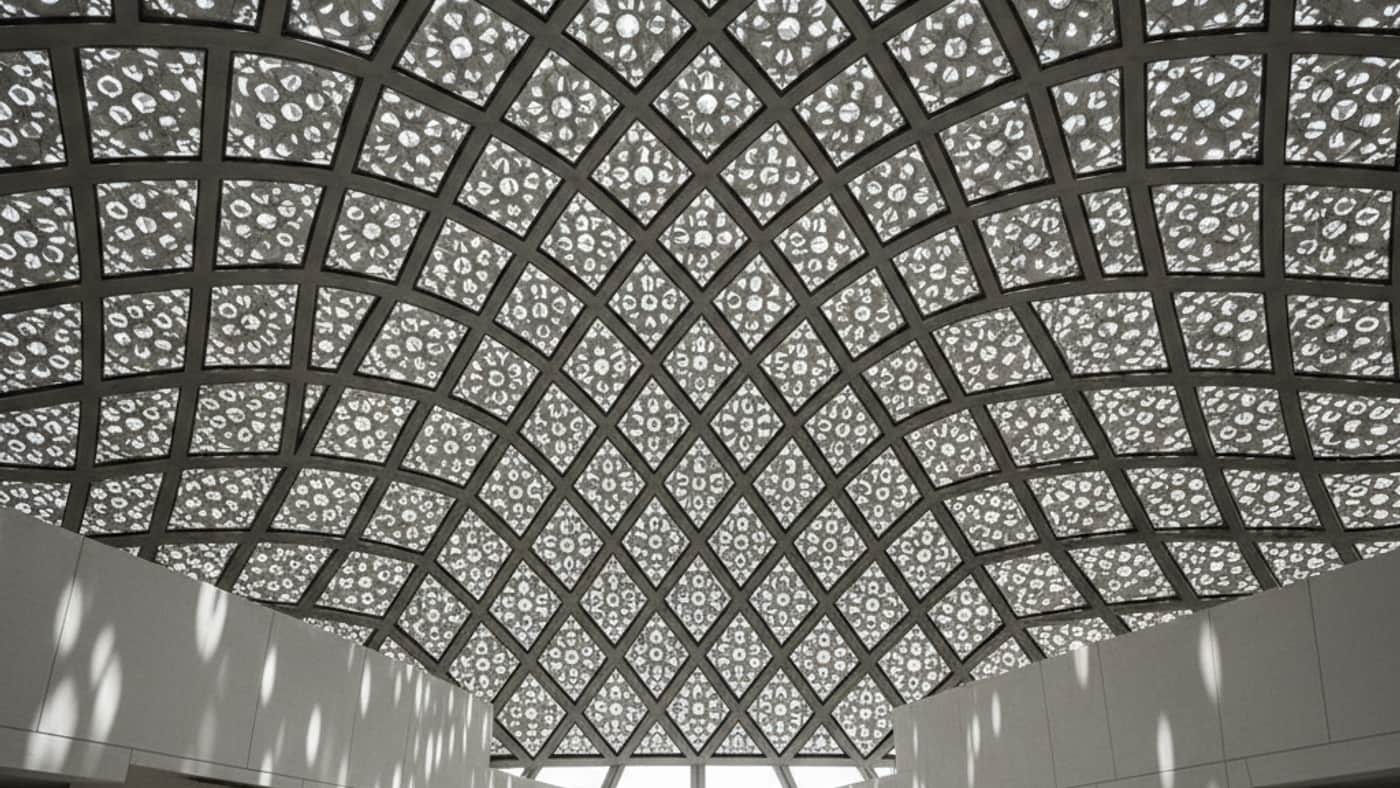
Jean Nouvel's dome stretches 180 metres in diameter and floats above the museum's white structures and waterways like a vast perforated parasol. It is composed of 7,850 geometric stars layered across eight architectural strata - some sources count nine when the steel support structure engineered by BuroHappold Engineering is included separately. The practical result is a shifting lattice of light that falls across the plaza, the walkways, and the water below. Visitors who arrive around 4 pm on a clear afternoon and position themselves toward the central plaza, facing west, tend to catch the effect at its most striking. The light pattern changes as the sun moves, so the experience is never identical twice. That said, cloud cover and seasonal variation affect the display - no particular afternoon can be guaranteed.
Louvre Abu Dhabi organises its permanent collection into twelve chronological chapters, tracing human creativity from prehistory through to the contemporary period. The curatorial approach - developed in coordination with Agence France-Museums, which brings together thirteen French public institutions including the Musee d'Orsay and the Centre Pompidou - places works from different cultures alongside one another deliberately. A visitor might stand before an ancient Egyptian funerary object and a Japanese lacquerwork screen in the same gallery, the pairing drawn from the museum's own published thematic framework. The effect is a conversation rather than a catalogue. Confirm the current chapter count with the official museum guide before visiting, as the collection continues to develop.
The fact that reframes everything: Louvre Abu Dhabi exists because of an intergovernmental agreement signed on 6 March 2007 between France and the United Arab Emirates. The deal runs for 30 years and 6 months - not an even 30, a detail that reflects how precisely the arrangement was negotiated. Under it, Agence France-Museums coordinates thirteen French public cultural establishments, including the Musee du Louvre, the Musee d'Orsay, and the Centre Pompidou, to provide expertise, loans, and curatorial support. For visitors, the practical result is access to world-class works that would not otherwise be under one roof in Abu Dhabi.
The most common questions visitors ask before arriving concern money and time - specifically, whether entry is free and how long to allow. The answers follow below, along with opening hours and visitor services. For the latest details, see the Louvre Abu Dhabi visit info. All fees, schedules, and policies should be confirmed with the official Louvre Abu Dhabi website before booking, as these details change periodically.
Entry is free for several visitor categories. Standard adult admission is AED 65, VAT included - treat this as the current baseline figure and verify it on the official ticketing page before visiting, as pricing is subject to change.
Free entry applies to:
Children under 13 must be accompanied by an adult - this is a supervision requirement, not a paid-entry condition. Tickets can be purchased at the door or in advance through the museum's official website; booking ahead is advisable during busy periods.
The museum opens at 10 am and the building remains accessible until midnight. Gallery hours are shorter: galleries close at 6:30 pm on weekdays and at 8:30 pm on weekends. The museum is closed on Mondays. Last gallery entry is 15 minutes before closing - a small but important detail worth noting before timing a late arrival. A Tuesday morning visit, arriving when doors open, typically offers the calmest experience through the permanent galleries. Friday afternoons draw noticeably larger crowds. For the outdoor areas and promenade, the cooler months from October to April are considerably more comfortable. All hours should be confirmed with the official website before travel, as schedules can change around public holidays.
Visitors who prefer a structured experience will find audio guides available at the museum, covering the permanent collection with contextual commentary on key works. Themed cultural tours - led by museum educators - run on a scheduled basis and reward visitors who want deeper context than a self-guided walk provides. For accessibility, the museum offers full wheelchair access throughout the galleries, and family facilities are integrated into the visitor flow rather than tucked away as afterthoughts.
What follows is the route the Travel Camel team recommends for a first visit - structured loosely enough to allow for detours, with time ranges rather than fixed schedules. No two visits to Louvre Abu Dhabi run identically, and that is part of the appeal.
Arriving at opening - 10 am - gives visitors the clearest run through the permanent galleries before group tours arrive in numbers. The twelve chronological chapters move from the earliest prehistoric objects through to the contemporary period, and visitors moving through the architecture Jean Nouvel designed will find the progression feels spatial as much as historical. Travellers with limited time will want to prioritise the early chapters - covering ancient civilisations and their trade connections - and the later chapters where the collection's cross-cultural philosophy becomes most visible.
Confirm the current chapter count and sequence with the official museum guide before visiting; the gallery structure continues to evolve.
Travellers who slow down outside the main galleries will discover that some of Louvre Abu Dhabi's most memorable works are not inside the air-conditioned rooms at all. Jenny Holzer's permanent commission For Louvre Abu Dhabi (2017) consists of three texts carved into marble panels on the museum's external gallery walls - easy to walk past, worth pausing for. Giuseppe Penone's Germination (2017), a site-specific installation in three parts including Leaves of Light and Propagation, anchors the landscape between structures. Inside, the gallery chapters each hold individual works of significance - specific loan items rotate, so current holdings should be checked on the official website before the visit.
The museum's on-site cafe and restaurant options sit within the complex, and travellers who time their break for around 11:30 am or after 1:30 pm typically avoid the peak midday rush. The dining area offering a direct view across the water is worth seeking out - not for the menu specifically, but for the quality of the light across the promenade at that hour. Food prices align with what visitors would expect from a major international cultural institution; treat any figures found in secondary sources as approximate and verify current menus and hours directly with the venue before the visit.
Louvre Abu Dhabi runs a programme of rotating temporary exhibitions alongside the permanent collection. Past exhibitions - including Spices and Wonders - illustrate the model: thematic, ambitious, and quite distinct from the permanent gallery tone. What is showing during any given visit changes; checking the official website before the trip is the only reliable way to plan around it. Travellers who veer away from the main gallery flow will often find quieter corridors connecting the island's pavilions, where the interplay between Jean Nouvel's architecture and the surrounding waterways is at its most calm. The Abu Dhabi Festival, which cycles through cultural events across the city, occasionally brings programming that extends into the museum's wider calendar - another reason to check current listings close to the travel date.
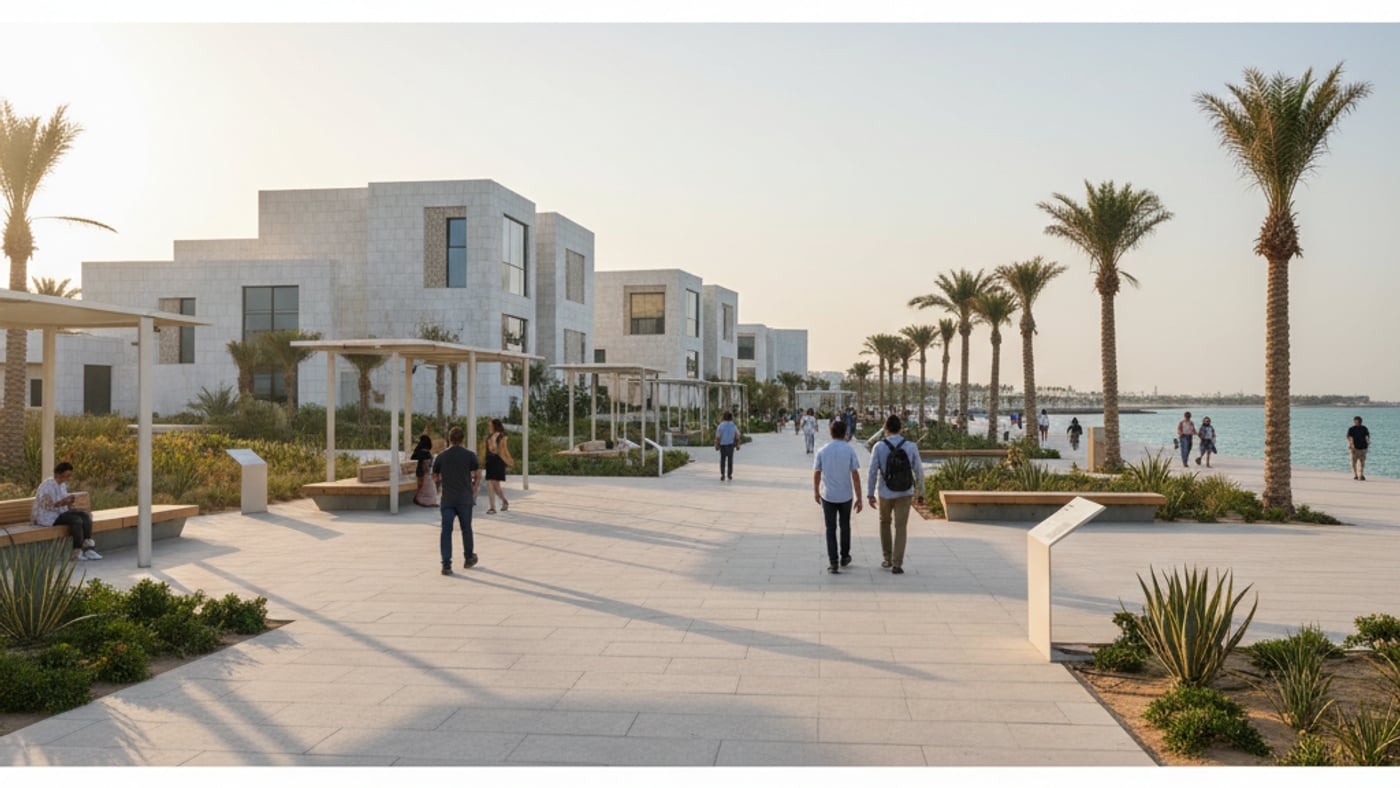
Louvre Abu Dhabi sits within the Saadiyat Cultural District on Saadiyat Island - and travellers who block an extra half-day for the district as a whole will find the visit considerably richer for it. Four major cultural venues now occupy the district, each covering different ground. The Guggenheim Abu Dhabi and the Natural History Museum Abu Dhabi complement rather than duplicate what the Louvre offers; teamLab Phenomena Abu Dhabi provides a sensory counterpoint to both. Frank Gehry's presence as the Guggenheim's architect makes the district an architectural conversation in its own right.
| Venue | Focus | Ideal Audience | Suggested Time |
|---|---|---|---|
| Louvre Abu Dhabi | Cross-civilisation art history, ancient to contemporary | All ages; architecture and history enthusiasts | 3-5 hours |
| Guggenheim Abu Dhabi | Modern and contemporary art | Contemporary art audiences | 2-3 hours (opening announced December 2026) |
| teamLab Phenomena Abu Dhabi | Immersive digital art | Families, technology-driven art enthusiasts | 2-3 hours |
| Natural History Museum Abu Dhabi | Natural history, interactive exhibits | Families, all ages | 2-3 hours |
Where Louvre Abu Dhabi spans civilisations and millennia, Guggenheim Abu Dhabi focuses on modern and contemporary art - a distinction that makes the two institutions genuinely complementary rather than repetitive for visitors spending multiple days on the island. Designed by Frank Gehry and operating under the Solomon R. Guggenheim Foundation, the building has an announced opening date of 11 December 2026 and is described by official sources as being in its final phase of delivery. Travellers planning a visit should confirm the current opening status with official Guggenheim Abu Dhabi channels before making the trip.
Travellers with children, or those seeking a contrast to classical collections, will find teamLab Phenomena Abu Dhabi - the official name for the venue - offers exactly that. Opened on 18 April 2025 as a permanent attraction in the Saadiyat Cultural District on Saadiyat Island, it uses digital environments and sensor-reactive installations to create an experience that sits at the opposite end of the spectrum from the Louvre's contemplative galleries. Tickets are sold primarily online; verify current pricing with the official teamLab Phenomena Abu Dhabi website before booking.
Travellers visiting with children will find the Natural History Museum Abu Dhabi a natural second stop after the Louvre. Opened to the public on 22 November 2025 on Saadiyat Island, it brings interactive natural history exhibits to a district that previously skewed toward fine art. Admission for children under 18 is free. As a recent addition to the district, current opening hours and adult ticket pricing should be confirmed with the official museum website before visiting.
Saadiyat Island sits a short distance from central Abu Dhabi, and the journey is straightforward by taxi, rideshare, or car. For visitors travelling from Dubai, the museum works well as a full-day trip rather than a rushed afternoon. The approximate costs that follow are presented as 2026 ranges - treat them as planning guides and verify current figures with operators and official sources before travel.
Travellers arriving from downtown Abu Dhabi will generally find a taxi or rideshare the most direct option, with journey times of approximately 20 to 30 minutes depending on traffic and approximate fares in the range of AED 30-50 one way (treat these as estimates). For visitors driving, the museum has a dedicated visitor car park open from 7 am to midnight - no overnight parking is permitted. Valet parking is available via Gate 1. When the main car park reaches capacity, additional parking at the nearby Abrahamic Family House serves as overflow. A public bus route serving Saadiyat Island - reported as route 94 in secondary sources - may offer a lower-cost option, but this detail should be verified directly with Abu Dhabi transport authorities before the visit. From Dubai, journey times by car are approximately 90 minutes to two hours depending on conditions.
All figures below are approximate 2026 estimates. Verify current pricing directly with the museum, transport providers, and dining venues before the visit. The AED 65 adult ticket is the confirmed baseline; all other figures are indicative ranges.
| Category | Budget Day | Mid-Range Day | Premium Day |
|---|---|---|---|
| Museum admission (adult) | AED 65 | AED 65 | AED 65 + guided tour |
| Transport (return, from Abu Dhabi) | AED 60-80 (taxi) | AED 60-80 (taxi) | AED 100+ (private transfer) |
| Food and drink | AED 40-60 (cafe) | AED 80-120 (restaurant) | AED 150+ (full dining) |
| Optional extras (audio guide, tour) | None | AED 40-60 (audio guide) | AED 100-150 (guided tour) |
| Approximate total | AED 165-205 | AED 245-325 | AED 415-530 |
For travellers with an interest in architecture or cross-cultural history, the answer is clearly yes. Jean Nouvel's dome alone justifies the journey - it is not a background detail but the defining experience of arriving at the museum. The collection's twelve-chapter structure, sustained by the Franco-Emirati partnership and the loan model it enables, delivers a range that few single-city museums can match. Two honest limitations: the collection's total scale is smaller than the Paris Louvre, and moving between outdoor sections during summer months involves navigating real heat. Travellers seeking a contemporary-art focus specifically may find the forthcoming Guggenheim Abu Dhabi a better primary destination once it opens. For everyone else, the combination of architecture, collection breadth, and setting on Saadiyat Island makes a visit consistently rewarding.
Top insight: Visitor sentiment across recent reviews consistently highlights the dome's light effect and the cross-civilisation gallery pairings as the two standout memories. The Travel Camel team's assessment aligns: the architecture and curatorial philosophy work together in a way that is easier to experience than to describe in advance.
Two documented criticisms have followed the museum since its development. French art critic Didier Rykner led opposition in France to the naming-rights arrangement, arguing that lending the Louvre name to a commercial and diplomatic deal compromised the institution's integrity. Separately, Human Rights Watch published reports in 2009, 2012, and 2015 documenting labour abuses on Saadiyat Island tied to the museum's construction, including passport confiscation, delayed and unpaid wages, substandard housing, unsafe working conditions, and arbitrary deportations. These are serious, documented concerns. The museum has acknowledged the labour issue in official communications and broader reforms have been announced at a government level. Today's visitor experience is built on a foundation that carries that history - knowing it is part of visiting honestly.
Louvre Abu Dhabi's rotating exhibition programme means the experience shifts with each visit; the permanent collection offers enough depth that the same twelve chapters reveal different details the second time through. As one of the most visited cultural institutions in the region since opening in 2017 - visitor milestone figures should be verified with official 2026 Louvre Abu Dhabi communications for current accuracy - the museum has established a settled, confident identity within the Saadiyat Cultural District. Travellers who plan even a half-day here, and leave time to walk the promenade as the afternoon light moves through the dome, tend to find the experience holds longer in memory than they expected.
Entry is free for visitors under 18, UAE senior nationals and residents aged 60 and over, People of Determination and one companion, ICOM/ICOMOS card holders, and journalists with valid press ID. Standard adult admission is AED 65 (VAT included). Confirm current pricing with the official ticketing page before visiting.
For travellers interested in architecture or cross-cultural history, it is a genuinely rewarding experience. Jean Nouvel's dome and the twelve-chapter collection structure are the standout elements. Those focused purely on contemporary art may also want to plan around the forthcoming Guggenheim Abu Dhabi nearby.
Three to five hours covers the permanent galleries comfortably at a measured pace. Visitors who also plan to explore the outdoor promenade, catch a temporary exhibition, and stop for lunch should allow a full day. The gallery closes before midnight, so there is room to be flexible.
Jean Nouvel designed a 180-metre dome composed of 7,850 geometric stars across eight architectural layers. The dome creates the "Rain of Light" effect - shifting light patterns across the plaza and water below. BuroHappold Engineering handled the structural design. The late-afternoon light display on the central plaza is the most striking window to experience it.
Tickets are available at the museum entrance or in advance through the official Louvre Abu Dhabi website. Booking ahead is advisable during weekends and public holidays. The verified adult admission price is AED 65 (VAT included); confirm current pricing on the official ticketing page before the visit.
The two institutions share a name and a partnership, but Louvre Abu Dhabi is an independent museum. It operates under a 30-year and 6-month intergovernmental agreement between France and the UAE, coordinated by Agence France-Museums across thirteen French public institutions. It is not a branch of the Paris Louvre.
The museum opens at 10 am and remains open until midnight. Galleries close at 6:30 pm on weekdays and 8:30 pm on weekends. The museum is closed on Mondays. Last gallery entry is 15 minutes before closing. Confirm current hours with the official website before visiting, as schedules vary around public holidays.
Louvre Abu Dhabi does not publish a strict dress code comparable to religious sites in Abu Dhabi. Smart casual dress is appropriate. As with any cultural institution in the UAE, modest and respectful clothing is advisable. Confirm any current guidance with the official museum website before the visit.
Three major venues share the Saadiyat Cultural District: teamLab Phenomena Abu Dhabi (open since April 2025), the Natural History Museum Abu Dhabi (open since November 2025), and the Guggenheim Abu Dhabi (announced opening December 2026 - confirm status before visiting). All are within reach on Saadiyat Island.
Both options are available. Audio guides suit visitors who prefer a self-paced, structured experience through the permanent collection. Themed guided tours, led by museum educators, provide deeper context and run on a scheduled basis. Availability and current pricing should be confirmed with the official Louvre Abu Dhabi website before booking.
Get an instant summary or ask follow-up questions about this article in your favourite assistant.

UAE Editor at TravelCamel
Daniel moved to Dubai in 2016 and covers attractions, transport and day trips across all seven emirates. His rule for every guide: if a place is not worth the ticket, the guide says so. More guides by Daniel →